
Politics as pop culture. Fall 2026 issue out!
Marshall is a nonpartisan student created and student run publication intended to get students thinking and talking about how politics, policy, and government impacts their everyday lives. The stories and views expressed are those of the student authors and not representative of the University of Maryland or its units.
Thank you to the following Marshall supporters and sponsors:
College of Behavioral & Social Sciences, College of Information, University Libraries, Center for Social Value Creation, Arts for All, Division of Student Affairs, College of Arts and Humanities, and Frederick Douglass Center for Leadership through the Humanities.
Welcome to Marshall!
TerpsVote has spent the past two semesters working on a magazine to connect politics and pop culture so students at UMD have the oportunity to learn about policies that affect them! Marshall is split between the Local, State, and Federal sections, each of which talks about policies that directly impact students.
Why Marshall?
By: Anderson Harlor
When we thought of starting a political magazine, the biggest question on our minds was what to call it. A longer name would make our publication seem like a lecture, which is the last thing we’d want it to be. Anything expressly mentioning the area we are in would make it seem like a tourist pamphlet - something we were also pretty unenthusiastic about, so we decided to give our publication a short title, just one word, just one name.
After making our initial decision to have a one word title, we were faced with the even harder decision of picking a name that represents the goal of our magazine: to bridge the gap between politics and pop culture in the hopes of creating greater interest in all levels of the political process within our community. Marshall, at its core, is about inclusion: including as many people in the political process as possible by covering politics at all levels as a practical matter of daily life that is accessible to any person of any background. We view the role of Marshall to be breaking down the barriers to information that have often kept people disengaged with politics, barriers that have effectively kept them out of the local, state, and national decision making processes. At TerpsVote, our goal is to have every student vote in every election. Expanding access to politics is at the core of TerpsVote’s mission and Marshall’s as a result.
Now with all of this in mind, we started researching people who expanded access to politics throughout American history, with a particular focus on someone from Maryland. The first name to jump off our list was that of Justice Thurgood Marshall because of what he did to expand access to the political process during a crucial period in our nation’s development.
In the earlier days of is his legal career, Justice Marshall personally argued Smith v. Allwright (1944), which required states to ensure all eligible voters equal access to primary elections, regardless of race. And before Smith, Justice Marshall argued Murray v. Pearson (1936), desegregating the University of Maryland’s law school, the same law school that denied Justice Marshall himself admission just six years prior.
Our magazine is called “Marshall” as a way of saying thank you to someone who dedicated his life to expanding access to the political process in the face of seemingly insurmountable adversity. With that being said, I believe that we bear a great burden of sorts, having chosen the name of such a figure in our history as the title of our political magazine; however, we feel very privileged to be held to such a high standard, because we would have it no other way.
Editor's Letter
By: Anderson Harlor
Conventional wisdom holds that Americans are tired of politics. Only 53% of eligible voters in the 18-24 age range voted in the 2024 election, so maybe this is the case. While this statistic may lead us to believe that we are collectively apathetic towards politics, I do not think that's the case; I think we are tired of feeling powerless.
Contemporary political discourse is often centered around the elected. This is partly because the way in which we engage with those vying for office is drastically different from how we once did three decades ago or even ten years ago: politicians are now in the palm of our hands, reaching us wherever we are; the American people have never had such direct exposure to their lawmakers as they do now. The elected have become the center of our perception of politics, which is partly why so many of us feel like we do not have a place in the political process, like we cannot make a difference. My team and I began to develop Marshall back in February to center our perception of politics around the driving force in our democracy: you. Marshall’s goal is to bridge the gap between politics and daily life and demonstrate how your engagement on Election Day and beyond can affect the issues you care about the most.
You do not need to be in a major that is conventionally politically oriented to find something that resonates with you in Marshall, because politics is a matter of everyday life - politics is for everyone. Regardless of how much you think you know about politics, you have a place in the discussions around the policies that affect you, because, to quote our namesake Justice Thurgood Marshall, “This is your democracy.”
All of our content will be available on TerpsVote’s website (go.umd.edu/Marshall), and physical copies of Marshall will be available as well - we are incredibly grateful for our sponsors who helped us make Marshall a reality. If you have any comments (or concerns), please reach out to us @terpsvote.
Once you open the next page, you will see how local, state, and federal politics connects to every part of your life in ways you might have not realized. Our hope is that you, yes you, find something in here that resonates with you (we know you will), and take a more active role in your local community and in the wider political process as a whole.
We hope you enjoy our inaugural issue.
The Local Section of Marshall is meant to shed light on local issues that directly impact students. Writers looked into different aspects of the College Park community from liquor licenses to interviewing council people to the recall of foods.
The Purple Line: Are They Even Trying?
By: Cate Harris
The jokes never get old, but hopefully the class of the 2030 is the last to have to endure the reality of them. The last piece of rail has been laid on the Purple Line, the project now 90% complete and in its testing phase, so one could assume that the projected Winter 2027 projected opening is as accurate as can be. However, almost a decade of pushing back the opening of the Purple Line has left many antsy and distrustful, wondering why the Purple Line has taken so long? The answer: democracy.
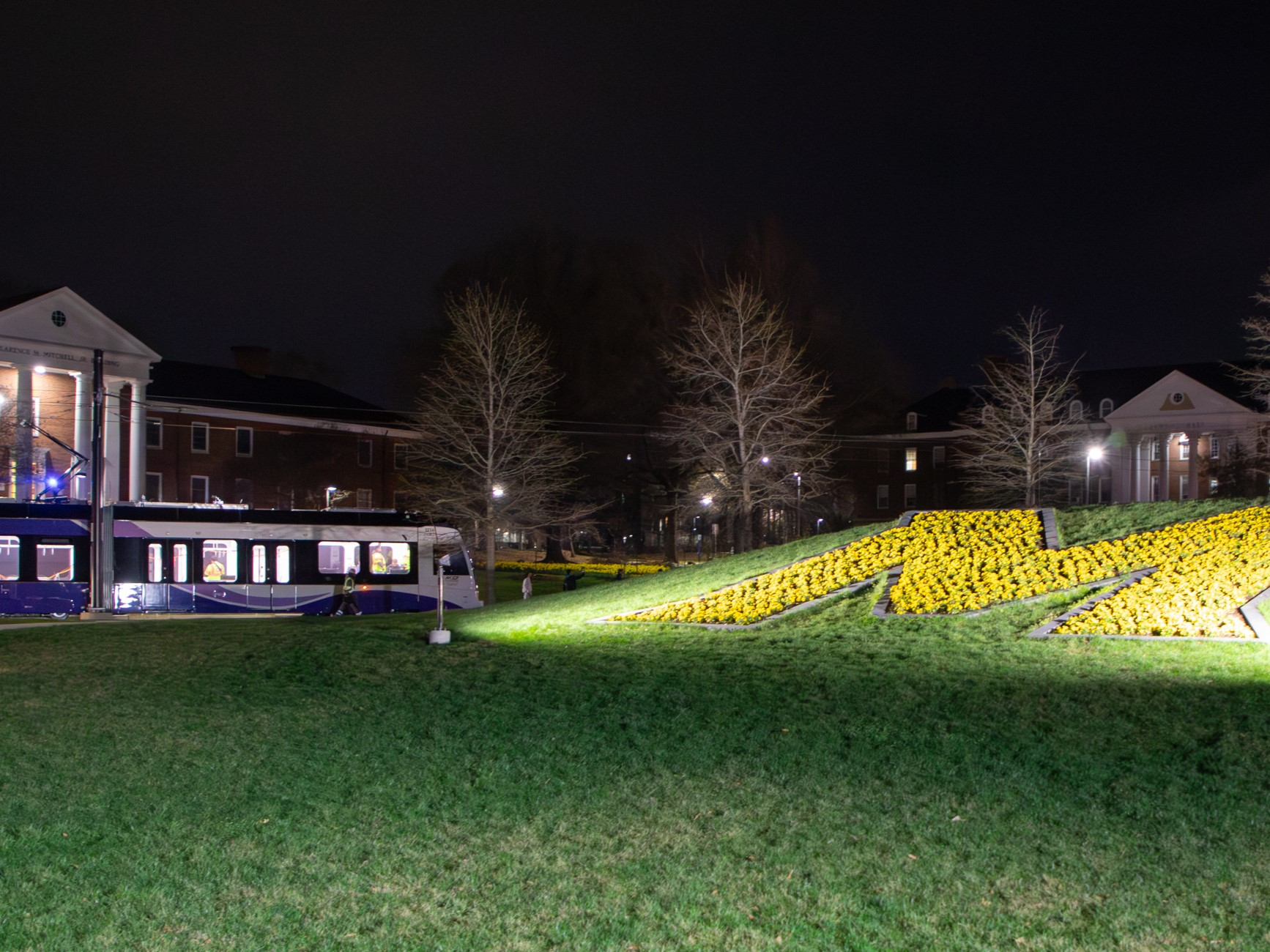
No public works project is completed very quickly, especially one as monumental as a new rail line. There’s planning and studies, community outreach, budgeting, contracting, and putting all that together to finally complete the project. This can mean confusion for the general public when a project is announced and then there’s crickets for years after, but the long timeline means our system is working the way it should and letting everyone’s voices be heard. Multiple studies, bi-yearly Community Advisory Team meetings, and constant construction notices from DOTS show that this is exactly what happened with the Purple Line.
On a local level, Montgomery and Prince George’s County, and their residents, had significant input in the conception of the light rail. The concept of the “Purple Line” has been around since the 1990s, ever since CSX transportation retired a rail line in Montgomery County, with the western portion of the track bought by Montgomery County and MDOT receiving jurisdiction over the eastern portion (Peck, 2020). Throughout the early 2000s, various governors and county executives were in favor of various plans including the current Purple Line being built today, along with alternate stations along the current route (including a route driving right in front of South Dining hall); a route running along the Outer Loop, expanding upon the “heavy rail” Metro lines; and several bus rapid transit routes that required less investment overall (MTA 2008). This decision about which plan to choose was complicated by Montgomery County’s have consistent skepticism about the purple line; in a 2008 memo, the Capital Planning Commission called the major study that argued for the Inner Loop plan “seriously flawed” and claimed it posed major problems to the areas impacted, primarily citing Walter Reed closures in DC and continued growth at Bethesda Medical Center and NIH in MoCo, as well as traffic issues that could be caused by rapid bus transit or light rail (National Capital Region Transportation Planning Board, 2008).
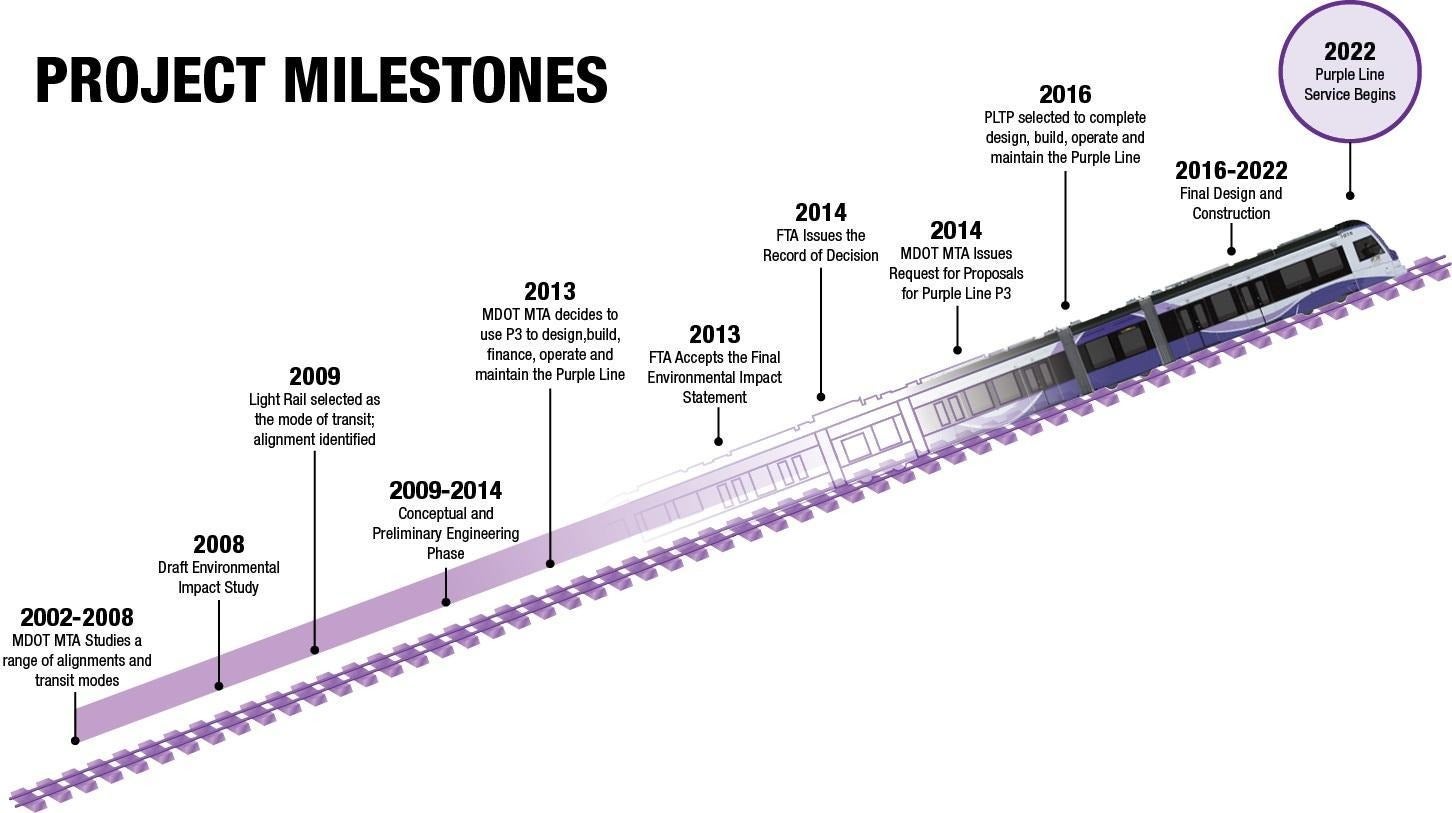
The actual building of the rail was complicated by changing administration at the state level. Governor O’Malley (2007-2015) began approvals and investments in the Purple Line, but his successor, Anthony Brown, was defeated by Larry Hogan, who was much more skeptical of the project, specifically the fiscal impact of it. Hogan takes some time to review the plans before continuing with them, beginning in August 2017 with a planned opening of spring 2022; updates include pushing back opening to fall/winter 2022 for PG County and full service with MoCo by spring 2023 (Peck, 2020).
Even once the building began the timeline and path of the Purple Line was still being affected by local advocates and judges’ rulings. Legal challenges came from the “Friends of Capital Crescent Trail,” who sued the Purple Line three times over the course of development and construction. A contractor dispute in 2020, in which a judge ruled the original contractors could suspend their partnership with Maryland due to the state not providing additional funding for the project, halted building until a decision came forward and after when the state had to hire new contractors. Columbia Country Club in Bethesda and several towns along the rail line also extended serious lobbying efforts to prevent or change the path of the Purple Line, usually citing concerns around construction disruptions (Abamu, 2026).
The era of construction and testing will soon be over and the tradition of freshmen getting confused when Google Maps tells them to walk to class on a route that doesn’t exist will end, but then we will have to figure out if all the noise, traffic, and blocked sidewalks were worth it. Will the Purple Line raise rents? Will traffic on Campus Drive get better or worse? Are these changes going to outweigh an easier trip to Bethesda or New Carrollton? We will find out in Winter 2027 (hopefully).
References
Abamu, J. (2026, September 7). Some Maryland environmental activists want to shake their NIMBY reputation | WAMU. WAMU. https://wamu.org/story/26/09/07/maryland-environmental-activists-nimby-reputation/
Maryland Transit Administration (MTA). (2008, September). Chapter 1: Purpose and need. https://purplelinemd.com/media/oktllh4o/06_chapter1.pdf
MTA. (2008, September). Chapter 2 Alternatives considered. In Chapter 2 Alternatives Considered (pp. 2–1). https://purplelinemd.com/media/o12dlkfo/07_chapter2.pdf
Peck, L. (2020, September 16). Tracking the ups and downs of the Purple Line’s roller coaster history. Bethesda Magazine. https://bethesdamagazine.com/2020/09/16/tracking-the-ups-and-downs-of-the-purple-lines-roller-coaster-history/
MDOT. (2019). Project Overview. Purple Line. Retrieved September 23, 2026, from https://purplelinemd.com/about-the-project/overview
MDOT. (2019, Sept). Purple Line: Overview. Wayback Machine. Retrieved Sept, 2026, from https://web.archive.org/web/20190917101543/https://purplelinemd.com/about-the-project/overview
National Capital Region Transportation Planning Board. (2008). Review of Comments Received and Recommended Responses on Project Submissions for Inclusion in the Air Quality Conformity Assessment for the 2008 CLRP and FY 2009-2014 TIP. https://drive.google.com/file/d/1p1EMmSgjmD_z6GVAAy_EXDn3r3uJnpk-/view
Rooted In Action: What the Cyclospora Outbreak and UMD’s Farm System Can Teach Us About Consumer Civic Engagement
By: Ian Susswein

Source: CDC Public Health Image Library
You probably never thought twice about swapping out the lettuce in your favorite food this summer, whether it was a burrito, a salad, or something else. That may have been the reality for some Maryland residents which served as a reminder of how consumers view the system that puts food on our plates.
On July 14, the CDC, regulatory officials, and the FDA compiled data to investigate a multistate outbreak of cyclosporiasis and discovered that iceberg lettuce was the culprit. The initial findings came from various Taco Bell locations, which were associated with 1,644 Cyclospora-related illnesses (FDA, 2026). The FDA traced the lettuce to Taylor Farms de Mexico as the main source of the lettuce affiliated with the restaurant locations. The investigation expanded on July 17, when health officials found people who had been exposed through the lettuce by Taylor Farms in other locations. The outbreak expanded beyond the five-state cluster to more areas, including Maryland (FDA, 2026).
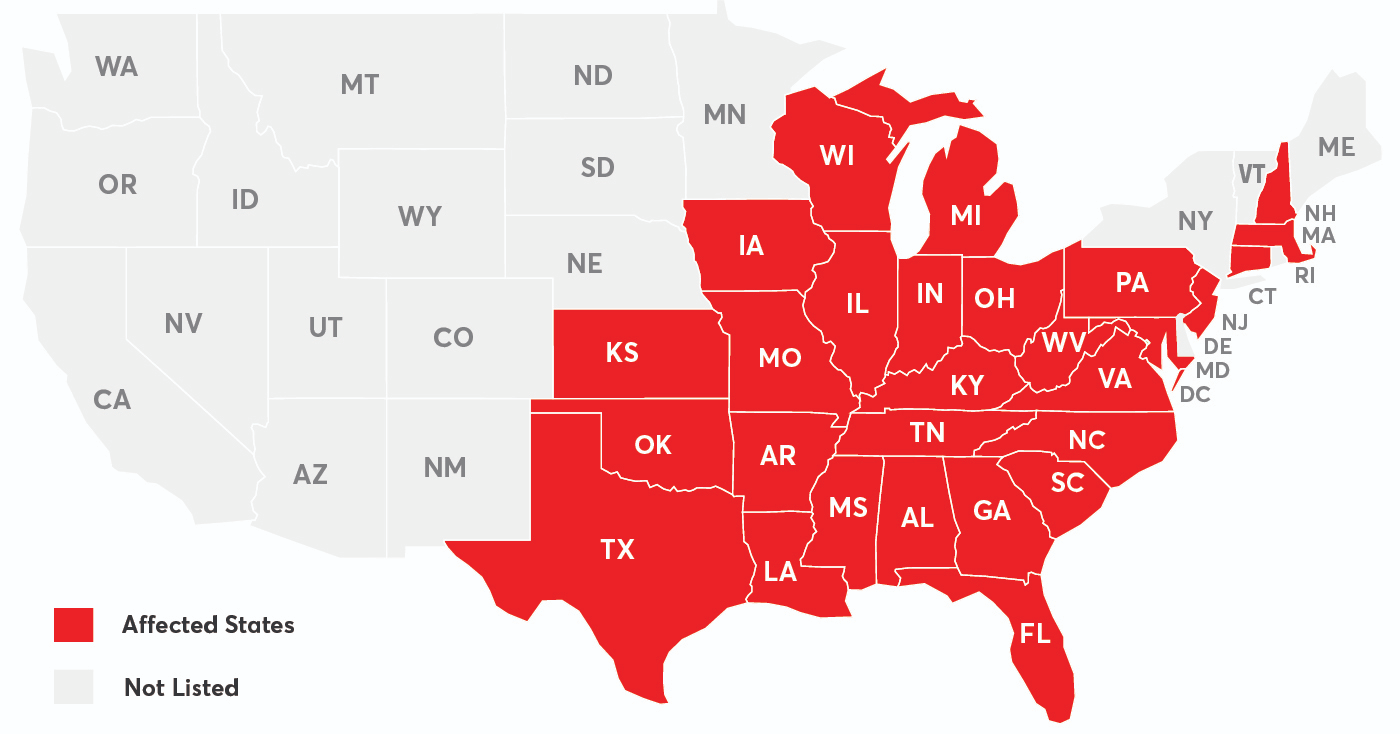
A visual representation of affected states identified during the outbreak | Source: FDA
For most, the investigation happened almost entirely outside of our view. We buy the food. We eat it. If something goes wrong, we wait for a recall or public-health announcement. Sometimes the people and systems responsible for an error in the food to plate chain can feel just as distant as the farms themselves.
Every year, thousands of students create many memories at dining halls from the first day of freshman year, to fun and never-ending conversations with friends, all while feasting on the variety of foods thanks to the specialized supply chain of UMD. While many bulk ingredients and shelf-stable items come from national distributors, UMD works with shorter supply chains involving local farms to help supplement items such as regional poultry, and dairy products. UMD is proud to offer another system of food chain management called the Terp Farm, located 15 miles from College Park in Upper Marlboro offering more than 90 varieties of vegetables (Parsons, 2016). While the system allows for more individualized attention from smaller chains, the real charm stems from the accessibility of involvement for consumers.
Terp Farm is proud to allocate many opportunities for students, whether through volunteering, research, and other programs. More importantly, it is straightforward for students to have a voice. The Food Recovery Network started at UMD in 2011 (Thompson, 2022) when students recognized the gap in the tail-end of the supply chain and created a system to collect surplus food from dining halls. The campus pantry also ensures that hyper-local produce coming from Terp Farm is effectively distributed to peers facing food insecurity. UMD’s food system stays robust through the importance of education. When students have more access to training grounds for agriculture, management, and sustainable cultivation, they are more likely to create more opportunities for improvements due to a more welcoming environment for consumers.
These programs matter not just because they feed people or offer volunteer hours. They make the food system visible. A student who studies farming practices volunteers on a farm or helps redistribute food starts to see food as more than something on a menu. Food becomes part of a network of choices and responsibilities.
Even though most consumers eat food that travels hundreds of miles from the field, universities could serve as bridges between agricultural systems and everyday people. Through partnerships with farms and food companies schools can help turn research into tools used in the wider food industry. Students gain hands-on experience while preparing for careers. This does not mean universities should take over the job of agencies that oversee food safety. Instead they can add a link between research, industry and the public. Students can join the food system through internships and labs. Graduates and community members can stay involved as informed citizens and advocates.
The cyclosporiasis outbreak was never really about lettuce. It was about how connected we all are to systems we rarely notice. UMD shows one way this connection can be strengthened: by giving people the chance to understand and shape the food system. We don’t all have to reach the same conclusions about how these systems should work. But we can all take the time to understand them, form our own views, and decide how we want to participate.
References
Program, H. F. (2026, September 11). Investigation of Multistate Outbreak of Cyclospora Illnesses: Iceberg Lettuce (July 2026). U.S. Food and Drug Administration; FDA. https://www.fda.gov/food/outbreaks-foodborne-illness/investigation-multistate-outbreak-cyclospora-illnesses-iceberg-lettuce-july-2026
Katelyn Parsons D.C. Correspondent. (2016, January 23). Terp Farm Showcases Sustainable Farming. Lancaster Farming. https://www.lancasterfarming.com/terp-farm-showcases-sustainable-146-farming/article_1c0e22f5-56da-5109-84c8-f53def655375.html
Students restart Food Recovery Network to reduce food waste at UMD. (2022, March 2). The Diamondback. https://dbknews.com/2022/03/01/food-recovery-network-restart/
Martineau, P. (2026, July 17). Cyclospora-Linked Lettuce Reached 28 States, Including Walmart and Jack in the Box Locations. Consumer Reports. https://www.consumerreports.org/health/food-recalls/taylor-farms-pulls-mexican-lettuce-linked-to-cyclospora-para-a7871344748/
Mackie and Mitchell
By: Luisa Depkin
In 2024 the C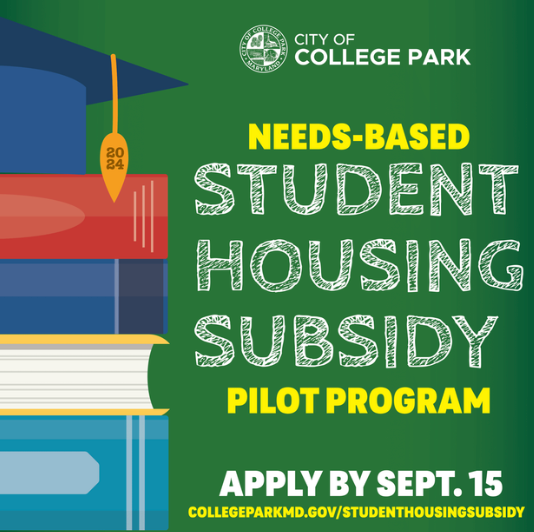 ity of College Park offered 150 UMD Students a $1,500 housing voucher, where did that go? (College Park City Council, 2024) There’s so much that happens at the local level that goes unnoticed by the student body, things that substantially impact our conditions for the better. What can your City Council do for you? What can your council members do for you? What role do YOU play in your local democracy, and how can you make a difference on the issues you care about, like cost of living.
On September 11th, 2026 I had the opportunity to talk to both council members Maria Mackie and Denise Mitchell. I wanted to talk to these women to get better insight on how students are contributing to the City of College Park and what we could do to become more civically minded. While it may sound hard to get involved in the city, these interviews have shown me how simple it truly is. Both council members put emphasis on encouraging students to get involved, they want to hear our voices so we can make change.
My first conversation with Councilwoman Mackie focused on the housing subsidy pilot program in 2024. Mackie is notable for being the deciding vote for the housing legislation mentioned above. “Most of the money comes from students living in these high rises… the income came from them. I thought, "Let's see if we can give it back,” said Mackie. This program came from a $515k surplus created by a 3 cent tax increase on commercial, industrial, and apartment property taxes (Binder, 2024). The City of College Park has 35,418 residents (“College Park City Quick Facts,” 2025) in addition to the 40k UMD students that live in the area. I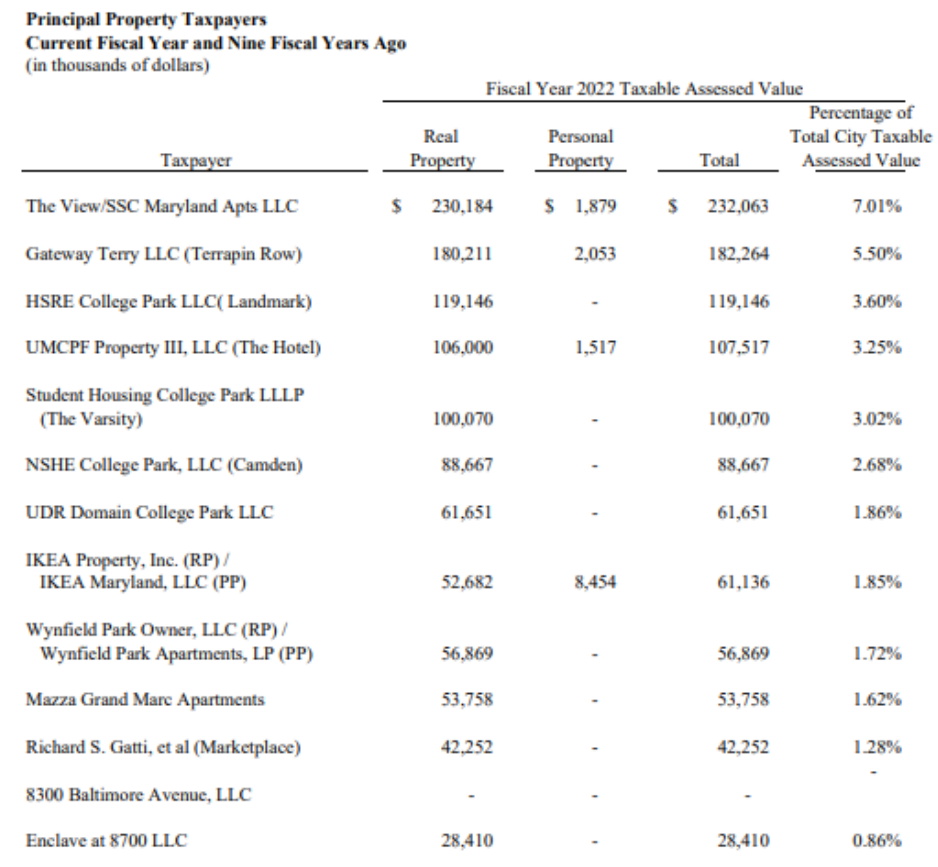 n 2022 The View, Landmark, and Terrapin Row accounted for 16% of the cities total real property tax revenues and when looking further apartment complexes such as Domain, The Varsity, and Mazza contribute large sums of money as well (City of College Park, 2024) . In 2025, general property taxes make up 54% of the city's revenue (City of College Park, 2025). In addition to off campus housing, students also spend a lot in downtown College Park. Streetcar Suburbs Publishing interviewed a few businesses close to campus in 2024 such as Cava, Board and Brew, Das Biergarten, Marathon Deli, and more. These businesses concluded that between 50-95% (depending on the business) of their customers are college students and when the summer hits, they have to get creative with ways to make money (Publishing, n.d.). This is being said so that you understand that your money has a huge impact on the economy of College Park and a lot of its revenue and therefore a lot of its spending, is our money.
Thinking back to the pilot housing program, doesn't it make sense that this surplus went towards the students? When you look at city wide initiatives you should be aware that your money is being used, and sometimes it goes back to students like in these housing programs, but other times it's used for city wide initiatives that may not necessarily impact students. This is why students should be constantly reaching out to their council representatives and suggesting ideas, because at the end of the day it's your money that they use. Your taxes go somewhere. Why don’t you decide where they go?
At the end of the day there were 150 lucky students that got the money with many people being turned away. Councilwoman Mackie was very insistent on attempting to find a better program or system so that when we get a surplus again, the city could find a better way to spread the wealth across more students. There are many opportunities for students to be a part of this conversation. Students are able to go to city hall meetings or simply send an email to share their ideas. Councilwomen Mackie and Mitchell were trying to emphasize how they want to hear from students! University of Maryland students make up a big portion of their constituents, so go and change their minds. When speaking with councilwomen Mackie I asked if she would vote for this program to get passed again. She responded by saying that she wanted it to be more equitable, but at the end of the day she would have to hear from her constituents, and that is you!
Politics is a part of daily life, when you complain about the quality of roads, how much financial aid you get, the price of groceries and gas, taxes, infrastructure development, public transportation, regulations on companies (Tuskegee University, 2025), I could go on and on, all of these are directly impacted by politics and the people that we voted into office. We do not live in a “silo” as Councilwoman Mackie says, we live in a community where we can help each other. You can choose to not make an effort, or you can choose to make positive change.
As constituents, you have a stake in the wider city of College Park, not just on campus. Councilwoman Mackie sees the relationship between students and residents as “isolated” and she's not wrong. It is very easy to isolate yourself on campus, you can spend most of your college career staying on campus, downtown, or in DC. But have you traveled outside of that bubble?
Mackie mentioned the big snow storm we had at the beginning of the Spring 2026 semester. There were many people who would have happily paid students to shovel their driveways, yet there was no initiative from UMD students to do that. Being civically minded is simply thinking about the people around you. Getting to meet new people, hear their stories, maybe even gain some connections for an internship or job? Any person I’ve talked to said they love talking with students and helping them, students just don’t take the initiative to do that. It's worth it to spend some of your day talking with others, helping people like shoveling their driveways during winter storms or volunteering at the food bank.
When I interviewed Mackie and Mitchell, they were very insistent on hearing college student voices. We make up half the town, whether you vote here or not,  it's imperative that you share your voice with your representatives. Students helped pass the Housing Subsidy Program through written and oral testimony. Mackie recounted several times when students contacted her and she took action to attempt or successfully fix their problems such as plumbing problems in apartments, bad lighting systems, more affordable food and housing.
Mackie said “It's not just the university. It's their city. College Park is their city” showing that Mackie cares about students and their opinions. We need to take the initiative and meet her halfway.
“This is your home, take ownership.” - Councilwomen Mackie
Councilwoman Mitchell emphasized student opinions during our interview. Mitchell, having seen the benefits of getting together a group of people to address the needs of the city instead of placing those burdens on a few council people alone, renewed the Quality of Life project, a city wide initiative based in District 4 which focuses on improving living conditions for residents, including students (D4 Work Group Members for the Quality Project, n.d.). This program was first started in 2013 and ended in 2015 after it brought success. Looking at the 2015 report, its strategies and implementation ideas were set up with some being “complete /well underway” (College Park Neighborhood Quality of Life Committee – List of Potential Strategies, 2015).
The first meeting occurred on September 2nd, 2026, (D4 Work Group Members for the Quality Project, n.d.) where the top responses she’s seen are illegal construction (Airbnbs), walkability, and lack of public transportation. This meeting was done over Zoom and is incredibly accessible and open to students. Councilmembers encourage everyone to attend so that they can hear all opinions. There are many city wide policies that affect certain aspects of the student experience such as occupancy permits (this is why the lines at the bars are so long), housing prices increases (while this is controlled by the county, change happens at the small scale first), public transportation, property maintenance, construction, etc. Campus tabling events and social media have been Mitchell’s main outreach strategy, and talking to intern Nick DiSpirito, this seems to be going well and attracting attention. While policy action won't be taken for a few more months, that gives us, the students, time to speak with these council members and tell them what we want to see. Complete the survey on their instagram or use the QR code in the first look fair picture to give quick and easy feedback to the Quality Project Group!
“This is your second home.” - Councilwomen Mitchell
So many students don’t consider college park their home since they don't vote here and they compare it to the places that they’ve lived for the majority of their lives so being in college park for a few years seems like nothing. Councilwoman Mitchell wants to encourage students to see college park as their second home, because it is. This is where we live for a majority of the year, this is where your friends are, your home is here. There are even students who stay in College Park over the summer to complete internships or simply because they want to stay in the area. We contribute heavily to the economy and are a big part of the College Park population, whether this is the address on your ID or not, College Park is your home and you have the ability to influence so much of what happens here.
Students can also change their voter registration between different elections. If you want to vote in the next College Park municipal election in 2027, it's a simple process of just going online (if you have a Maryland drivers license) or submitting a paper form (that TerpsVote can collect from you) to change your voter registration to College Park. Councilwoman Maria Mackie got 147 votes and Councilwomen Denise Mitchell got 159 votes out of the 2,646 voters registered in District 4 (City of College Park General Election 2025 Preliminary Results, 2025). While there was no competition, imagine what could have happened if more people ran for county council and more people went out and voted. This brings up another important question of how can we get people to run in these county elections? Being a council member simply requires being a citizen in the U.S, registered voted in College Park, 18 years of age, and having been in the city for at least a year (“Candidate Guide,” 2025). Plenty of UMD students meet these qualifications so maybe it’s time to not only encourage students to vote, but to run for these offices so they can bring the student perspective into the city council chambers.
It's up to students to take this step and want to be a part of the change. Councilmembers are attempting to make it as easy as possible to get involved, simply joining a Quality of Life meeting on Zoom, or sending a quick email to your representatives are all effective ways to suggest change. Councilmembers Mackie and Mitchell want to hear your suggestions to solve complicated issues such as housing and affordable food.
Your voice is not just important to the city of college park, it’s the driving factor in changes in the issues you care about. When students testified on the housing subsidy program, it got passed. When students worked towards passing the Early Lease Ordinance in 2025, it got passed. If students take a greater role in the City Council, monumental pieces of legislation that benefit every student will get passed. College Park is a small town, less than 200 people voted for our current council member representative. There are plenty of times in history where students have made a huge impact in a bigger town, so College Park should be easy? While it may not feel that way, there are so many organizations on campus like TerpsVote that want to help project student voices and opinions. If you have an idea or a complaint and you don’t know what to do with it, feel free to contact TerpsVote or any of the other many activism based organizations on campus to help you and support you in making that change.
References
Binder, E. (2024, April 16). Key takeaways from the proposed College Park City Budget. The Diamondback. https://dbknews.com/2024/04/16/key-takeaways-from-the-proposed-college-park-city-budget/
Candidate Guide. (2025). In City of College Park. https://www.collegeparkmd.gov/DocumentCenter/View/7061/2025-GENERAL-ELECTION-CANDIDATE-GUIDE?bidId=
City of College Park. (2024). Off Campus Student Housing Needs-Based Rent Subsidy Grants: Pilot Program. In College Park City Council Meeting. https://www.collegeparkmd.gov/DocumentCenter/View/5746/1_23_2024-Student-Subsidy-Presentation
City of College Park. (2025). CITY OF COLLEGE PARK ADOPTED OPERATING BUDGET & CIP FOR FISCAL YEAR 2026. In City of College Park. https://www.collegeparkmd.gov/DocumentCenter/View/7046/FY26-ADOPTED-Budget
City of College Park General Election 2025 preliminary results. (2025, November 4). City of College Park. https://www.collegeparkmd.gov/m/newsflash/home/detail/859
College Park City Council. (2024). Off Campus Student Housing Needs-Based Rent Subsidy Grants: Pilot Program. In College Park Council Meeting. City of College Park City Council. https://www.collegeparkmd.gov/DocumentCenter/View/5746/1_23_2024-Student-Subsidy-Presentation
College Park City Quick Facts. (2025). In United States Census Bureau. United States Census Bureau. https://www.census.gov/quickfacts/fact/table/collegeparkcitymaryland/PST045225
College Park Neighborhood Quality of Life Committee – List of Potential Strategies. (2015). City of College Park. https://www.collegeparkmd.gov/DocumentCenter/View/269/NQOL-Strategies-List?bidId=
D4 Work Group members for the Quality project. (n.d.). City of College Park, Maryland. https://www.collegeparkmd.gov/Calendar.aspx?EID=10336&month=9&year=2026&day=2&calType=0
News Flash Archive - Redistricting Commission public meetings. (2022, August 25). City of College Park. https://www.collegeparkmd.gov/m/newsflash/Archive/Item/384?arcId=1124
Publishing, S. S. (n.d.). Downtown businesses get creative to attract customers during summer. Streetcar Suburbs Publishing. https://streetcarsuburbs.news/41842/college-park/downtown-businesses-get-creative-to-attract-customers-during-summer/
Tuskegee University. (2025). Your major on the ballot — ask every student. Ask Every Student. https://www.studentvoting.org/your-major-on-the-ballot
The State Section focuses on Maryland based policies that are impacting students such as flock camera and lobbying. We encourage students to share their voices with their state representatives because you have more power than you think, especially when it comes to state laws!
Flock Cameras Catching Flak?
By: Teemo Taiwo
If you’ve been paying close attention to changes on the road you may have noticed them: little camera poles perched on street corners, quietly sipping on the data of every car that passes by. Automatic License Plate Readers (ALPRs), better known as Flock Cameras, are on the tip of everyone’s tongue. Though the technology was first developed in 1976 by the Police Scientific Development Branch in the United Kingdom (Grogan, 2025), the recent addition of AI to the system is now a point of contention for many Americans.
Maryland now has over 1,000 ALPR and they’ve become almost as controversial as the taste of matcha. Everyone has an opinion, so we hit the streets of College Park to ask students what's brewing in their minds about the newest form of surveillance.
ALPRs work by scanning the license paint, model, car color, and any other identifying feature of a vehicle and logging it in a national data base. Access to this date base varies amongst states and jurisdictions, so the recipe isn’t the same everywhere. Under Maryland Public Safety Code Section 3-509 only authorized law enforcement can access the database for a legitimate safety concern or criminal investigation (Md.Code,Pub.Safety-3509, 2024). To address public safety concerns about data privacy all data is stored in a system controlled by the Maryland Coordination and Analysis center.
Shania Stockmans, a sophomore Criminology & Criminal Justice major, expressed her near indifference for flock cameras stating that she empathizes with other discomfort but does not feel that way herself as long as the data is handled by law enforcement.
On the other hand nobody came in hotter than Ryan, a junior studying Ornamental Horticulture and Landscape Management, who took the conversation from parking lot cameras to clone conspiracy in thirty seconds flat: “I can't even walk outside without something selling my face,” Ryan shared “ I think everyone here will get copied by flock cameras outside. Now that I'm really thinking about it.”
To Ryan there is only one clear solution to the issue of mass surveillance in the United States “AI usage needs to be reduced, they must get rid of [Anthropic] and OpenAI, and they have to get rid of flock cameras.”
Despite varying public opinion one crucial question remains, are ALPRs effective?
Emily Zangit, a sophomore studying Psychology noted she “ feels like that they're being used for the right stuff, and that's fine. But…based on our history in America… it's a very real possibility they could get abused.”
Then there’s MJ, a senior studying Electrical Engineering who was appalled to discover the presence of a flock camera on Baltimore Avenue right by the Taco Bell, an establishment he frequents often. MJ believes flock cameras to be too invasive but he couldn't help but address how flock cameras are “Wonderful technology, if I'm being objective, but I don't like how invasive and I don't like the breaching nature it has.” Even while criticizing the cameras, MJ couldn't help but admire the engineering. It's a classic engineering dilemma, admiring the mechanics of a system while wanting nothing to do with it. Overall MJ believes the tech to be impressive, with a bitter aftertaste.
It's still up for debate whether ALPRs are actually effective. According to the ACLU less that one percent of cars scanned are connected to crime compared to the 10% of cars scanned on the road. Supporters of flock cameras often reference the crimes these cameras help solve, while critics point to the instances of misuse and possibility of abusing the system. For now, UMD students are left to decide the tradeoff on their own. Which is of greater concern, safety, privacy, convenience,or consent. Whichever you decide it is clear that ALPRS are a part of the future whether they are here to stay or not.
References
Grogan, B. (2025, October 15). From patrol cars to poles: How automated license plate readers became a crime-fighting star. Police Chief Online. https://www.policechiefmagazine.org/patrol-cars-poles-alpr/
Maryland Public Safety Code § 3-509 (2024). Use of captured license plate data. https://law.justia.com/codes/maryland/2024/public-safety/title-3/subtitle-5/section-3-509/
Lobbying is For Everyone!
By Gauri Nair
With the breakneck speed of news stories online, it’s normal to feel overwhelmed and confused about what we as students can do. The legislative process is made up of many moving parts, but it’s not as complicated to play ours as you might think. You might’ve heard of organizations and companies “lobbying” members of Congress, but it’s a lesser-known fact that we as students and regular citizens can actually lobby too! Lobbying is an essential way that constituents can advocate for what they find important to lawmakers.
So what exactly does this mean? What can you, as a student, do to advocate for an issue you care about? The Maryland General Assembly, which is made up of 188 representatives (47 senators and 141 delegates), is our state's governing body that creates and amends the laws that affect our everyday lives. For our Maryland voters, you’ll see all of these state reps up for election this November!
The Maryland General Assembly is in session for the first four months of the year, from January to April. During this time, a wide variety of interest groups host lobbying nights, during which they gather in Annapolis and guide participants through the process of engaging with their legislators. Some of these groups include Interfaith Partners for the Chesapeake, Everyone Votes Maryland, Maryland Catholics for Our Common Home, AFSCME Maryland, Chesapeake Climate Action Network, Maryland State Education Association, and many more.
One organization, the Maryland Education Association of Charles County, hosted a lobbying night where they spoke to their State Senator and spoke about issues directly impacting their schools and educators. State Senator Kevin Harris posted to Facebook, “From strengthening statewide school phone policies to addressing teacher pay disparities, these conversations matter. Just as important, I appreciated hearing directly about the unique needs and challenges facing Charles County.” (Kevin M. Harris, 2026). Lobbying nights are a great way of directly getting these issues to the people in charge of bringing ideas for laws to the table.
The American Federation of Teachers (AFT) Maryland has hosted multiple lobbying nights and as a result, gotten multiple bills into the legislature. AFT Maryland President Kenya Campbell says, “You should be a part of the decision making that happens. Lobby night is a big time for us to gather, when we come together, but we’re doing a lot of work behind the scenes.” (Campbell, 2026). Meeting with lobbying groups is a great way for students to be a part of getting ideas into the legislature.
You can find information about these lobbying nights by exploring the sites of local organizations that are important to you. Just by showing up, you can make a direct difference by showing strength in numbers and speaking face to face with legislators.
Here in College Park, as a part of the state legislative district 21, our state senator Jim Rosapepe and State Delegates Ben Barnes, Joseline A. Pena-Melnyk, and Mary A. Lehman represent us in the state legislature. Any of these representatives can be easily reached via their email or office phone numbers on the MGA website.
So if you ever find yourself thinking you don’t know where to start, remember that the Maryland state legislative process is designed for people like us to contribute to and spearhead change in our communities. A simple visit to the Maryland General Assembly website will tell you all you need to know and guide you through the process of becoming a more active member of the legislative process!
References
Kevin M. Harris. (2026, April 15). Lobby nights are a powerful reminder of what engaged communities can accomplish. I was proud to meet with members of [Post]. Facebook. https://www.facebook.com/kevin.m.harris2/posts/10162656175202694/
Members - Find My Representatives. (2026). Maryland.Gov. https://mgaleg.maryland.gov/mgawebsite/Members/District
Brown, D. J., & Ford, W. J. (2026, February 10). Mondays in Annapolis: Lobbyists, citizens come from across the state to push policy initiatives. Maryland Matters. https://marylandmatters.org/2026/02/10/mondays-in-annapolis-lobbyists-citizens-come-from-across-the-state-to-push-policy-initiatives/
Maryland Ballot Measures
By: Ishika Jain
Did you know that you have the power to directly influence legislation? Ballot measures are proposed ideas that appear on your ballot, that you can vote to approve or deny on election day. These can be at the state or local level. A lot of the language used may be confusing, and it can be hard to make a decision on the spot. But don’t worry, my goal today is to break down the 3 measures on the Maryland ballot so that you can go to the polls educated and ready to voice your opinion. These are the same questions that will be on every ballot in the state, so follow along if you are voting in Maryland!
Not voting in Maryland and want to learn more? Check out Ballotpedia for more information on your state’s measures.
The 3 Questions on the ballot this year are legislatively referred constitutional amendments (LRCAs), meaning they will change the state constitution if approved. In order to be approved, the LRCA must win the popular vote in the state, so the majority of voters must agree.
Question 1:
Let’s start by talking money. Question 1 on the ballot is about the State budget, specifically about whether the Governor should be required to allocate all of the necessary funds to agree to the terms and conditions of employment for all state employees.
Have you ever had an on-campus job or gotten paid by UMD in some way? If so, you are a state employee, so this is about you! This also applies if you ever plan on getting a job here, or working for any state-funded institution in Maryland.
If approved, the constitution would be amended to require money towards all wages, hours, fringe benefits, health benefits, and any negotiations of these to be outlined in the budget. If the measure fails, no changes will be made to the current language of the Constitution.
Question 2:
Next, let’s talk judgment. The Maryland Commission on Judicial Disabilities has the power to process and take action on complaints filed against judges in the State. They can also advise the State Supreme Court on what to do in certain scenarios regarding these concerns.
Question 2 on the ballot pertains to temporary vacancies on this commission. If passed, it would give the Chair of the Commission the ability to fill any temporary vacancies, given that the chosen substitute is eligible for the role and in good standing. It would also allow the Governor to make an appointment if the Chair prefers instead.
If however, the measure is voted against, these powers would not be given to the Commission’s Chair, nor the Governor. Therefore, no temporary members will be appointed to the Commission.
Question 3:
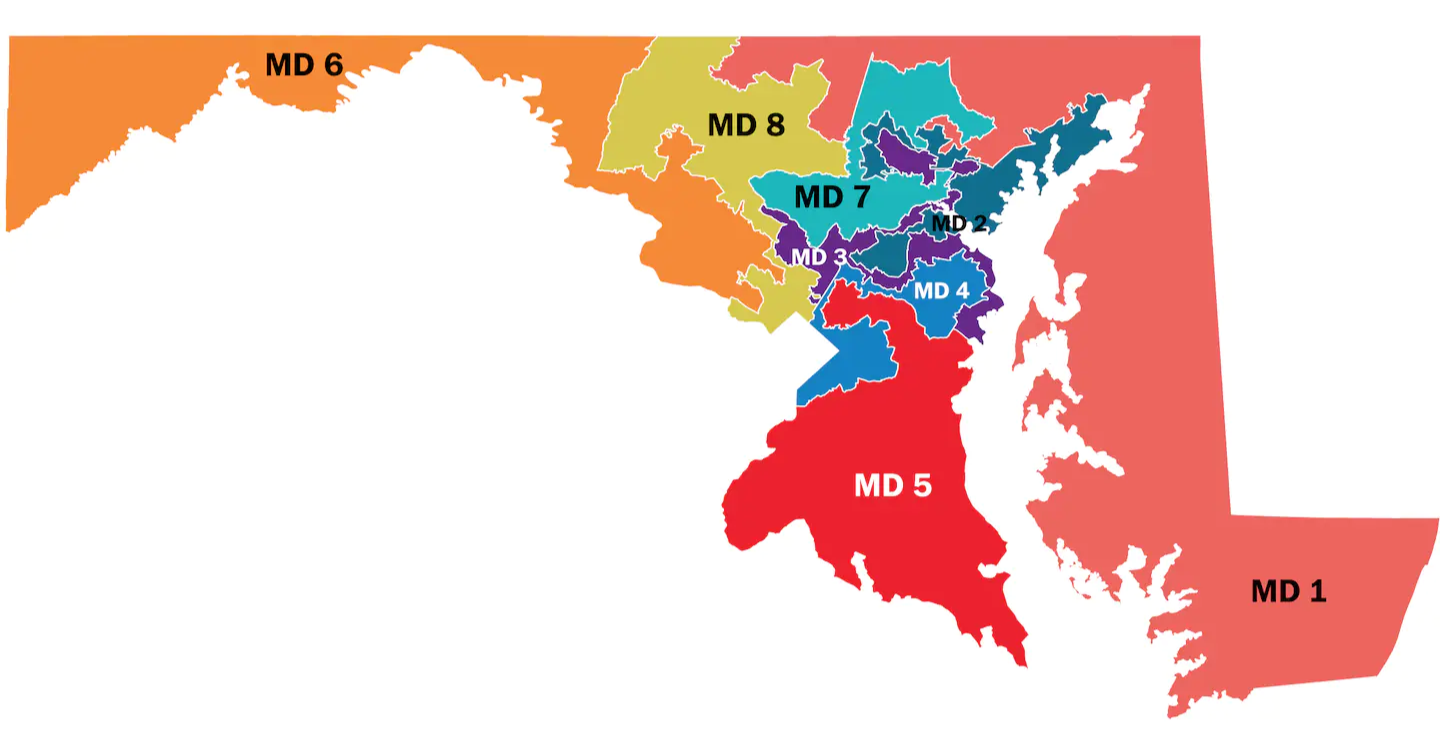
Finally, let’s talk redistricting. Quick history lesson: Maryland has a long-standing history of Gerrymandering when drawing Congressional districts. This is when maps are drawn to put certain populations together or spread them apart in an attempt to favor one party over another. This can be seen by Maryland’s snaking, and geographically sprawled lines in some areas
2012
2022
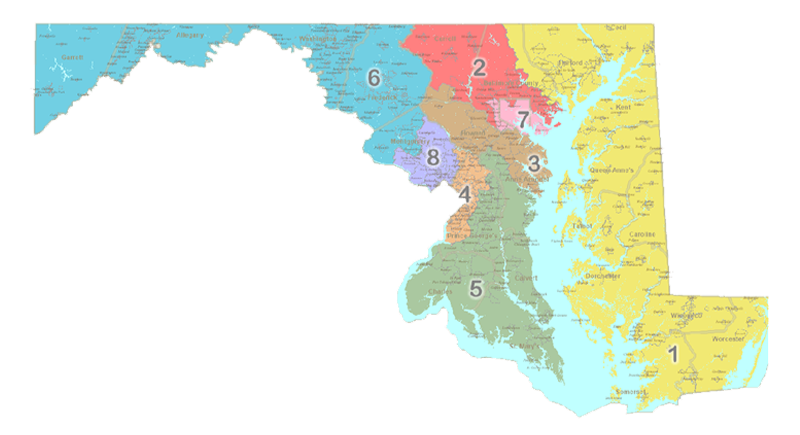
Question 3 on this year’s ballot is a measure that would make it so that the State Constitution’s rules for compactness, contiguity, and considerations for equal populations and natural and political subdivisions only apply to state legislative districts, not the federal congressional ones. The federal constitution does not currently have any guidelines for drawing congressional districts, so state lawmakers are at liberty to draw them as they see fit.
If approved, it would also give the Maryland Supreme Court complete authority over cases that challenge congressional districting plans.
If the measure fails, current districting requirements in the Constitution would be applicable to both State Legislative and Federal Congressional districts equally.
Conclusion
If you’ve made it this far, props to you for wanting to be an educated and engaged voter! Hopefully this answered some of your questions about the Questions on the ballot this November, so that you can show up to the polls ready to make your voice heard!
References
Ingraham, C. (2018, March 28). How Maryland Democrats pulled off their aggressive gerrymander. The Washington Post. https://www.washingtonpost.com/news/wonk/wp/2018/03/28/how-maryland-democrats-pulled-off-their-aggressive-gerrymander/
Maryland question 1, state employee collective bargaining and budget amendment (2026). (2026). Ballotpedia. https://ballotpedia.org/Maryland_Question_1,_State_Employee_Collective_Bargaining_and_Budget_Amendment_(2026)
Maryland question 2, commission on judicial disabilities vacancies amendment (2026). (2026). Ballotpedia. https://ballotpedia.org/Maryland_Question_2,_Commission_on_Judicial_Disabilities_Vacancies_Amendment_(2026)
Maryland question 3, provide that nothing in state constitution establishes criteria for congressional redistricting amendment (2026). (2026, September 22). Ballotpedia. https://ballotpedia.org/Maryland_Question_3,_Provide_That_Nothing_in_State_Constitution_Establishes_Criteria_for_Congressional_Redistricting_Amendment_(2026)
Pages - congressional-district-products. (2020). Planning. https://planning.maryland.gov:443/MSDC/Pages/9_gam/congressional-district-products.aspx
Special Session: What’s So Special?
By: Bevin Brottman
In just one week over the summer, the Maryland General Assembly passed a bill to change the Maryland constitution, Republicans leaders made a proposal to secede from Maryland and join a new state (“Delmarva”), and the MGA members battled over the new constitutional amendment in court. So how did we get here, and what does this mean for you and your ballot?
During the Legislative session, which takes place from January through April, the Maryland General Assembly (MGA) works to pass bills addressing some of the most pressing issues in Maryland. Every April, they wrap up their work and return to their other jobs during what is called the interim. While this is the usual schedule, sometimes the legislature reconvenes to discuss some urgent topics. This is known as Special Session.
This summer, Senate President Bill Ferguson and Speaker of the House Joseline Peña-Melnik, called a Special Session to address the topic discussed around the nation: mid-census redistricting, AKA re-drawing political maps that determine what district you live in. Since the summer of 2025, ten states have changed their congressional maps and more are predicted to follow suit (NCSL, 2026). Many of these maps have been challenged in court, labeled as partisan gerrymandering, meant to make states either more Democratic or Republican depending on leadership. Now, Maryland is joining the list of states attempting to tackle redistricting and the legal battles that accompany it as a response to redistricted maps around the country, largely in red states. Governor Wes Moore has stated, “We refuse to sit on our hands while Republicans engage in political redlining that guts decades of progress (Moore, 2026).”
While other states are proposing maps, Maryland is working to pass a constitutional amendment that would change the standards for congressional redistricting. The amendment would establish rules that federal lines do not need to be drawn by the same criteria as state lines, which would mean eliminating requirements such as drawing along natural physical boundaries, like rivers or coastlines (Ballotpedia, 2026). Technically, this means the legislature could draw lines anywhere to determine what district people live in and who they can vote for. This amendment will be put on the ballot in November and you will get to vote to determine whether or not legislators can re-draw congressional boundaries in a new way in the future.
As a contractual employee at the MGA this summer, I had the privilege of being in the room where it happened (Hamilton reference…). So let’s chat about what’s brewing in the legislature.
This summer, while working in-person in the MGA, I grew accustomed to the ghost town that was the interim – quiet hallways, empty streets, just me and my shaken espresso – until August third, when that changed massively. The legislature was back in session, and my job was finally exciting again. Tensions were high as the Senate’s Education, Energy, and the Environment Committee and the House of Delegates’ Energy and Transportation Committee met in the Joint-Hearing Room to hear testimony from colleagues and the public.
It became instantly clear to me that this bill left a bitter taste in the mouths of many. For hours, the room buzzed with oppositional testimony from organized interest groups, student groups, and average citizens. Again and again, the narrative repeated itself. The people of Maryland are worried about being disenfranchised by their government. People who testified in opposition argued that this amendment is being proposed so that the MGA can re-draw Maryland’s first congressional district, the last Republican district in Maryland, to push Congressman Andy Harris out of office and combine the region with Democratic areas.
To demonstrate his frustration, Republican Delegate Thomas Hutchinson of the Eastern Shore, proposed an amendment to Senate Bill 2100 that would add a question to the ballot, asking Marylanders whether or not they would secede from the state and join a new state called “Delmarva,” which would include parts of Delaware. While this secession would require congressional approval, the amendment (which was struck down) would have made a political statement about Marylander’s feelings about their own representation.
An interesting thing to note is the large number of people who came to oppose SB 2100 compared to those who supported it. This kind of turnout is not uncommon. People are often quick to show up to fight against the things they hate, and content to sit on the sidelines when they like something. While this passion is important, how might it affect our politics? What does this say about where we are? It is crucial to know that civic engagement is important whether you like or dislike policies. Any onlooker would have assumed based on the amount of oppositional testimony to SB 2100 that the majority of Marylanders oppose redistricting, but is that the truth? We will find out at the ballot box this November, where you get to decide.
While some bills take as long as 90 days (the length of the Legislative Session) to pass into law, the Maryland General Assembly passed SB 2100 in just two days. Within a week, MGA Republicans took this issue to court, challenging both the language of the ballot question and the circumstances under which Special Session was called. Senate Minority Leader Steve Hershey and his colleagues claimed that the MGA did not abide by the deadlines they had set for introducing legislation. They also claimed that the language of the ballot question was too confusing for voters to understand what it is they’re voting for. The lower courts upheld this argument, but the Democrats appealed this decision and the Maryland Supreme Court has since ruled that the question, now known as Question 3, will be on the ballot this November after some technical changes to how it is written (Paul, Thomson, & Lynn, 2026).
So there it is, the piping hot news: a ballot question in November that may result in the redrawing of congressional districts, a proposal to secede from Maryland due to this very question, and a whole lot of legal action. As a Marylander, this should matter to you. Your vote could make the difference in this debate and possibly determine who you can vote for in the future. We will see you at the ballot box!
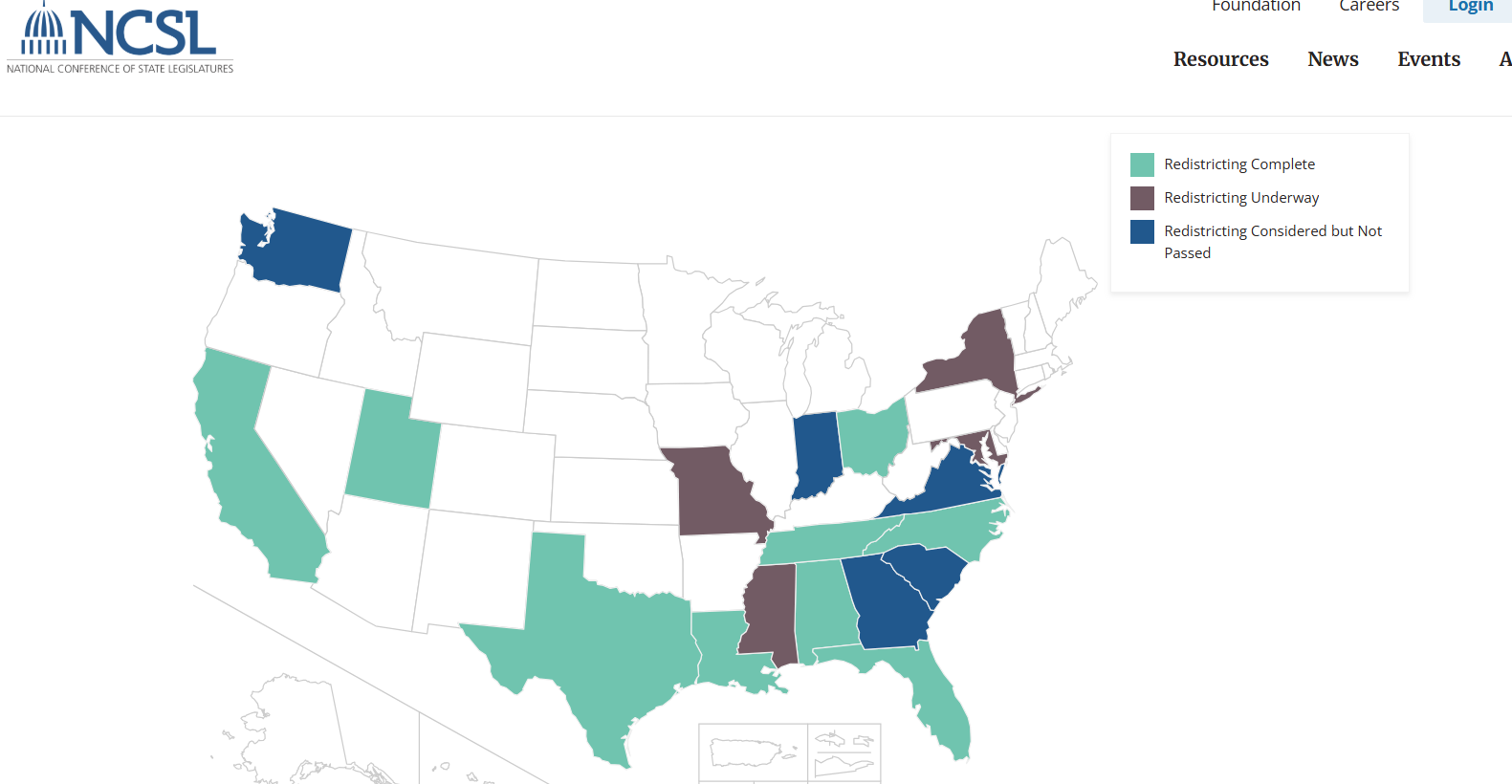
(Changing the Maps: Tracking Mid-Decade Redistricting )
References
Ballotpedia. (2026). Maryland Question 3, Provide That Nothing in State Constitution Establishes Criteria for Congressional Redistricting Amendment.https://ballotpedia.org/Maryland_Question_3,_Provide_That_Nothing_in_State_Constitution_Establishes_Criteria_for_Congressional_Redistricting_Amendment_%282026%29
NCSL. (2026, September 11). Changing the Maps: Tracking Mid-Decade Redistricting.
https://www.ncsl.org/redistricting-and-census/changing-the-maps-tracking-mid-decade-redistricting
Paul, A., Thompson A., & Lynn, B. (2026, September 3). Maryland Supreme Court rules redistricting question can appear on November ballot. CBS News.https://www.cbsnews.com/baltimore/news/maryland-supreme-court-rules-redistricting-question-can-appear-on-november-ballot/
The Office of Governor Wes Moore. (2026, September 3). Statement from Governor Wes Moore on the Maryland Supreme Court Redistricting Ruling. https://governor.maryland.gov/news/press-releases/statement-governor-wes-moore-maryland-supreme-court-redistricting-ruling
Marshall's Federal Section touches what our federal government has done to impact students. Since federal policy is so far removed it can be hard to see how these complex laws affect us. Read some articles on how the Big Beautiful Bill will impact your student loans!
TO BE OR NOT TO BE: AN HOUR AHEAD?
By: Nitya Pokharel
To most Americans, daylight saving time is just another national tradition—stealing an hour of sleep from us in the spring and returning it back in the fall. However, for something as simple as changing our clocks twice a year, the issue has become unexpectedly contentious on Capitol Hill.
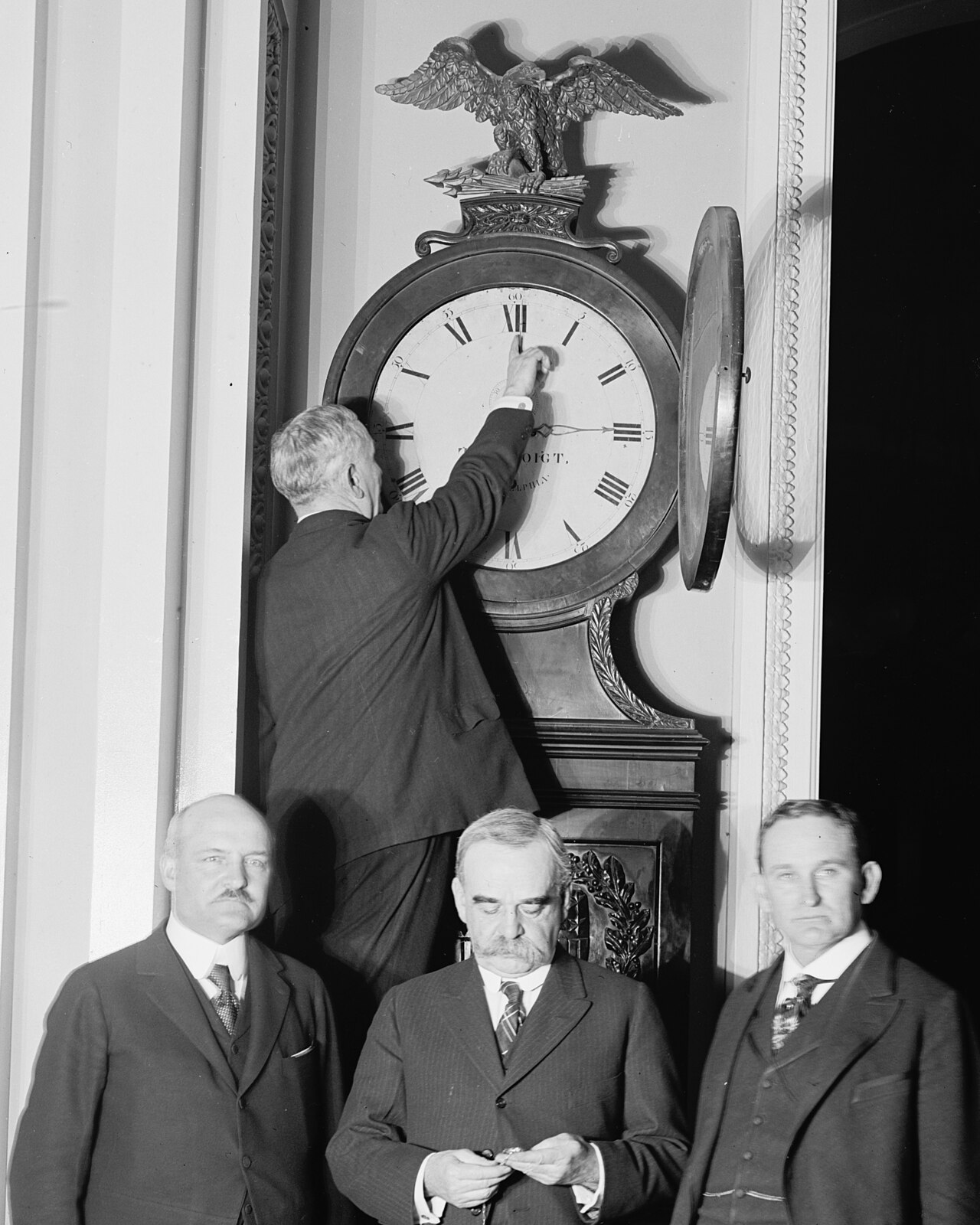 The Sunshine Protection Act, originally presented to the Senate in 2021 before expiring in 2022 while waiting for House approval, was reintroduced and passed by a House vote of 308-117 in July (Sunshine Protection Act of 2021, 2021; Sunshine Protection Act of 2025, 2025). With the exception of states and territories that do not observe the practice, such as Arizona and Hawaii, the Trump-backed bill would make daylight saving time (DST) permanent across the United States—effectively replacing standard time in many areas (Trump, 2026).
So—for the average American—how is this relevant?
The Maryland delegation was especially divided during House deliberation; out of its eight members of Congress, four voted against passage of the legislation and four voted in favor of it (U.S. House of Representatives, 2026). The votes also crossed party lines, with Democrats supporting the bill and Maryland’s only Republican representative, Andy Harris (MD-01) opposing it.
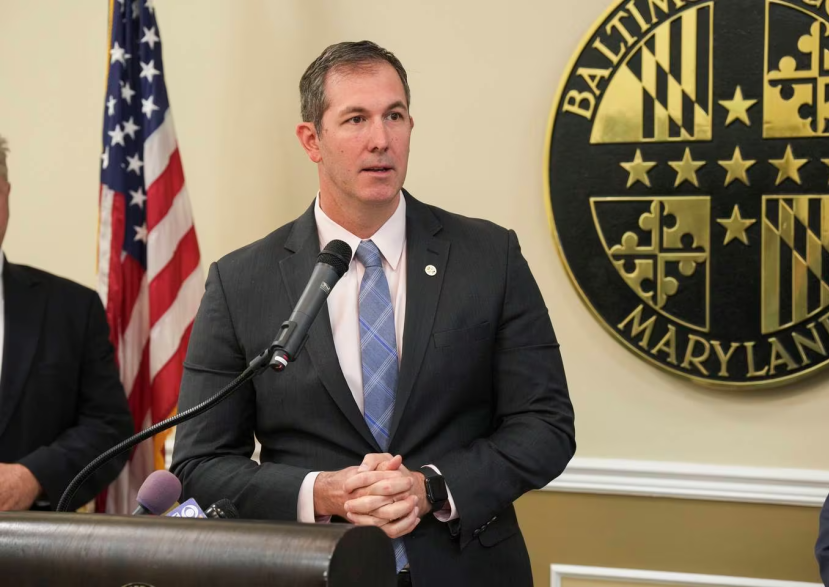
Rep. Johnny Olszewski (MD-02) was among the four Democrats who voted to pass the Sunshine Protection Act (Lee, 2026). He said that the law would “simplify life for Americans,” as well as “improve public safety, strengthen our economy and reduce the documented health impacts of twice-yearly clock changes.” However, fellow Democrats Rep. Jamie Raskin (MD-08) and Rep. Steny Hoyer (MD-05), who voted against the bill, both cited student safety as a primary concern.
H.R.139 now awaits consideration by the Senate and, if approved, will head to the Oval Office, where it would almost certainly be signed into law.
References
H.R.139 - 119th Congress (2025–2026): Sunshine Protection Act of 2025. (2026, July 15). https://www.congress.gov/bill/119th-congress/house-bill/139/all-actions
Lee, J. (2026, July 16). Maryland’s House members divided on permanent Daylight Saving Time vote. WYPR. https://www.wypr.org/wypr-news/2026-07-16/marylands-house-members-divided-on-permanent-daylight-saving-time-vote
S.623 - 117th Congress (2021–2022): Sunshine Protection Act of 2021. (2022, March 16). https://www.congress.gov/bill/117th-congress/senate-bill/623
Trump, D. J. (2026, August 4). For many years, the vast majority of Americans have asked to make Daylight Saving Time permanent... [Post]. Truth Social. https://truthsocial.com/@realDonaldTrump/posts/117039604712486897
U.S. House of Representatives. (2026, October 6). House roll call vote 238. Congress.gov. https://www.congress.gov/votes/house/119-2/238
How To Own Your Loans
By: Ava Rowledge
In 1978, outrage struck the University of Maryland student population as the Board of Regents approved a $439.8 million operating budget for fiscal 1980 that called for a tuition increase - raising tuition from a whopping $620 to $670 a year for in-state residents and an out-of-state increase of $180 to $2,390. When comparing those 1980 statistics to the current 2026 rates - $12,008 per year for in-state students and $41,974 for out-of-state students - those original tuition rates are looking pretty desirable, all in all, especially compared to the historically high rates that this generation of college students are facing today.
Over the past 40 years, college prices have risen exponentially across all institution types, resulting in approximately 30% to 40% of students and families taking out federal loans in order to fund their college expenses each year. Recently, however, the Trump Administration’s One Big Beautiful Bill Act (OBBBA) launched a complete overhaul of the current student loan programs that went into effect July 1, 2026. New programs were created, borrowing caps were changed, repayment plans were abolished and new ones were created. Here is what you need to know about the changes to student loans that may impact you as a college student:
- Changes to Grad PLUS Loans for Existing Borrowers
- New Graduate Unsubsidized Direct Loan Limits
- Undergraduate Limits and Parent PLUS Loans
- New Repayment Plans
Changes to Grad PLUS Loans
Grade PLUS is a type of loan for graduate and professional schools that previously allowed students to borrow up to the full cost of attendance. With the changes initiated by the OBBBA, the Grad PLUS program is in the process of being phased out, effective July 1, 2026, and new loans through the Grad PLUS program will not be available for new borrowers.
Current Grad PLUS loan borrowers, can continue to borrow a Grad PLUS loan within the “3-year or until program completion” period, with the stipulation that they remain at the same school and in the same program as when they first borrowed the loan prior to July 1, 2026.
New Graduate Unsubsidized Direct Loan Limits
For professional programs - medical school or law school - borrowers are allowed to borrow up to $50,000 a year with a $200,000 total borrowing limit. For all other graduate programs, borrowers are only allowed to borrow up to $20,500 per year with a $100,000 total borrowing limit.
The lifetime borrowing limit, or the maximum total of federal loans that students can borrow throughout the entire duration of their academic career is $257,500, including Grad PLUS, but excluding Parent PLUS (see Undergraduate Limits and Parent PLUS Loans for more information).
Undergraduate Limits and Parent PLUS Loans
There are no changes for undergraduate loans, but undergraduate loans will count towards the new lifetime loan limits - the $257,500 maximum.
Parent PLUS loans, which are loans made to parents of dependent undergraduate students, will now be capped at $20,000 per student per year. Additionally, there will be a $65,000 lifetime limit per dependent student
New Repayment Plans
For new loans disbursed after July 1, 2026, there will be two new repayment choices: the Repayment Assistance Program (RAP), an income-driven plan, or the Tiered Standard Plan, a fixed payment over 10-25 years depending on the loan balance.
Borrowers who were on previous income-driven repayment plans such as Saving on a Valuable Education (SAVE), Pay as You Earn (PAYE), and Income-Contingent Repayment (ICR), must transition to an eligible repayment plan before July 1, 2028.
As college students, it is important to understand the changes that the OBBBA has brought to the federal student loan system as it impacts families and futures alike. Students need to carefully consider the financial implications of taking on student loans under this new system, and ensure full understanding of the programs to prevent defaults on new federal loans. While this is not a flashy nor fun topic, it continues to be something that is felt by the American people across the country every day. If you want to continue to learn more about the changes to the federal student loan program, follow the links below to read more.
What borrowers should know about student loan changes in the One Big Beautiful Bill
What do the student loan changes on July 1, 2026 mean for me?
References
Barnes, B. (1978, August 23). Univs. of Maryland Seeks to Raise Tuition, Salary Tuition Hike Sought. The Washington Post. https://www.washingtonpost.com/archive/local/1978/08/24/univ-of-maryland-seeks-to-raise-tuition-salary/602d5a82-1a38-4ebb-a93b-50f7f40e566f/
FAFSA. (n.d.). What is a parent PLUS loan? Federal Student Aid. https://studentaid.gov/help-center/answers/article/what-is-parent-plus-loan
Harvard University. (2026). Key Changes to Federal Student Loans Made in the One Big Beautiful Bill Act. Harvard University Financial Administration. https://sfs.harvard.edu/changes-federal-student-loans
National Consumer Law Center. (2026, July 1). What do the student loan changes on July 1, 2026 mean for me? - Student Loan Borrowers Assistance. Student Loan Borrowers Assistance. https://studentloanborrowerassistance.org/what-do-the-student-loan-changes-on-july-1-2026-mean-for-me/#7
University of Maryland. (2025, April 17). Cost of attendance. Office of Undergraduate Admissions. https://admissions.umd.edu/tuition/cost-of-attendance
Urban Institute. (1995). Understanding college affordability. https://collegeaffordability.urban.org/covering-expenses/borrowing/#/
What is Federal Casework?
By: Ava Rowledge
As Congress members are gearing up for the midterm elections, constituents across the country are continuing to ask the simple question: what are members of Congress doing for me? With congressional approval ratings at an all time low, it is not an uncommon sentiment for Americans to be unhappy with the lack of representation that they are receiving from their congressional members. But, did you know that one of the primary ways in which a member can represent you outside of casting votes is by supporting their constituents in federal casework assistance?
Casework, in a congressional office, refers to the response or services that members of Congress provide to their constituents who request assistance with a federal agency. Typically, members and their staffs help individual constituents cut through the convoluted and complicated bureaucratic red tape to provide assistance with federal administrative agencies. By serving as facilitators and advocates, congressional representatives are able to clearly communicate constituents’ needs to federal agencies, and effectively offer the necessary support that constituents need during these increasingly difficult times.
Casework requests vary drastically, from helping track down benefit payments to applying for U.S. citizenship. Here is a list of common congressional casework requests:
- Tracking misdirected benefits payments
- Helping to fill out a government form
- Applying for Social Security, veterans’, education, and other federal benefits
- Explaining government activities or decisions
- Applying to a military service academy
- Seeking relief from a federal administrative decision
- Immigrating to the United States or applying for U.S. citizenship
If you wish to request assistance from a congressional office, be sure to contact your local U.S. House Representative or Senator - by calling their office or going onto their website - to submit a request and fill out a mandatory privacy release form so that your representative can provide the support that you need.
The Features Section focuses on pop culture such as sports and music and how this contributes to policy. Read about how your favorite artist or sports team has advocated for issues they are passionate about and how you can do the same!
All Things Go To The Polls
By: Bevin Brottman & Anderson Harlor
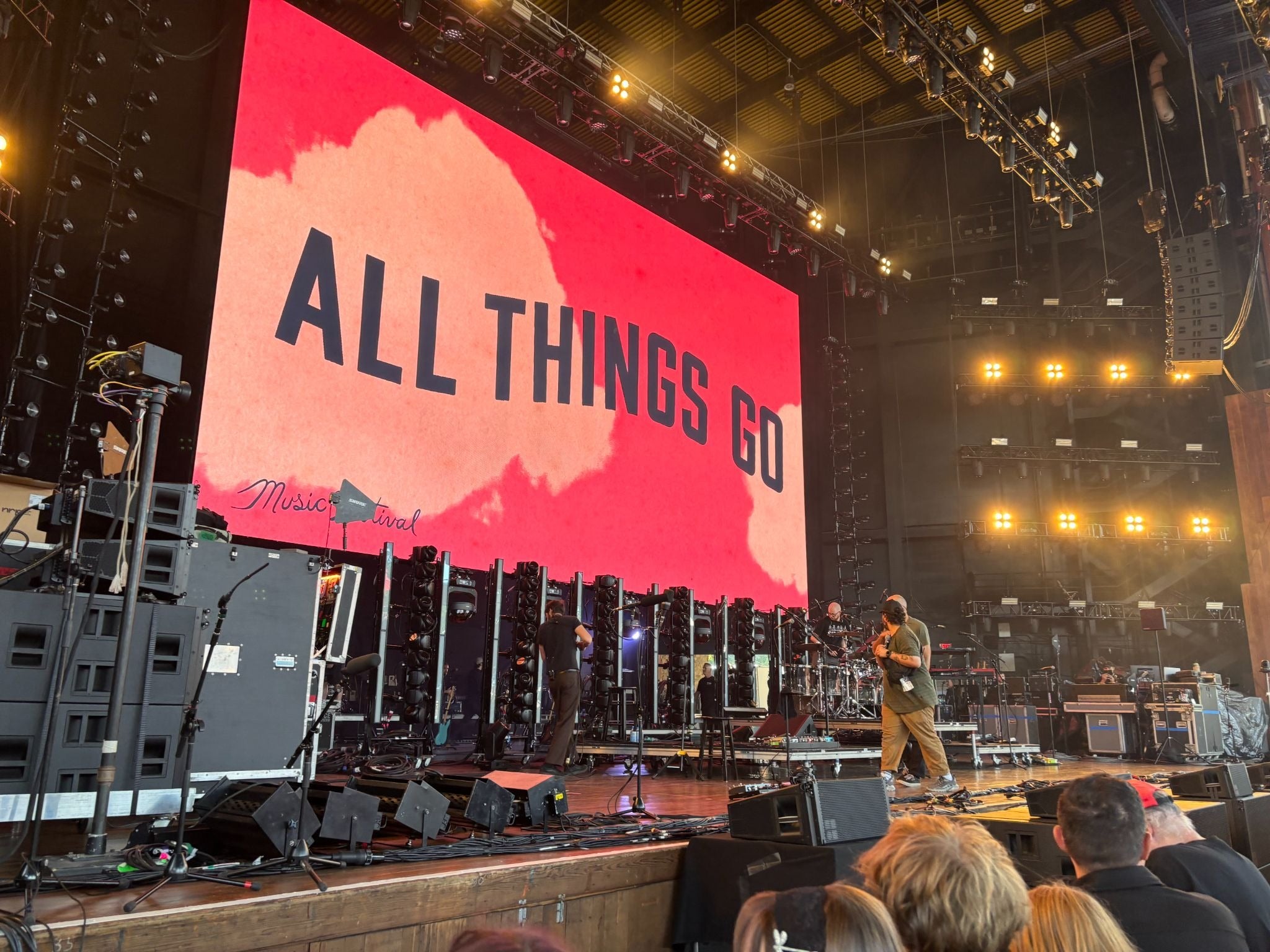
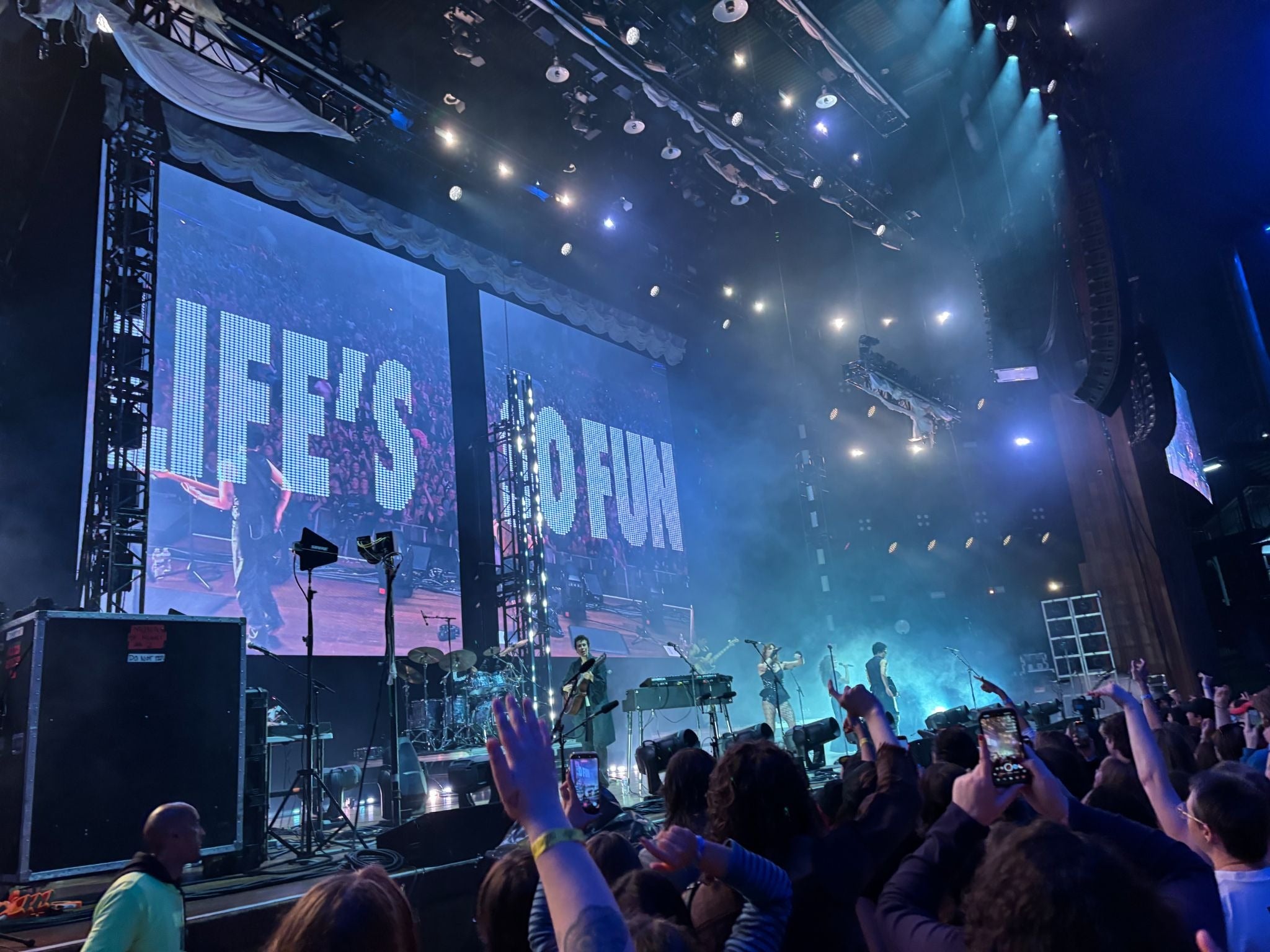
For the past six years, the music festival All Things Go has been held at Merriweather Post Pavilion, a venue just thirty minutes from College Park. Every year, Terps flock to this venue to see their favorite artists live. This festival, a hallmark of many students' fall semester, serves as more than just a fun outing with friends, because attending All Things Go, like any festival, is another way you can make an impact on the issues you care about beyond the ballot box.
Your vote matters, but that’s not all you can do to affect what matters to you; the polls are not the only place you can make a difference. Politics and pop-culture are so interconnected, so everything you engage with is inherently a form of civic engagement. How does your presence in an everyday activity affect the issues you care about? How does music mobilize people? What role do artists play in the political process?
We went to All Things Go on Friday and Saturday to answer these questions and discover just how your ticket is just as powerful as your vote.
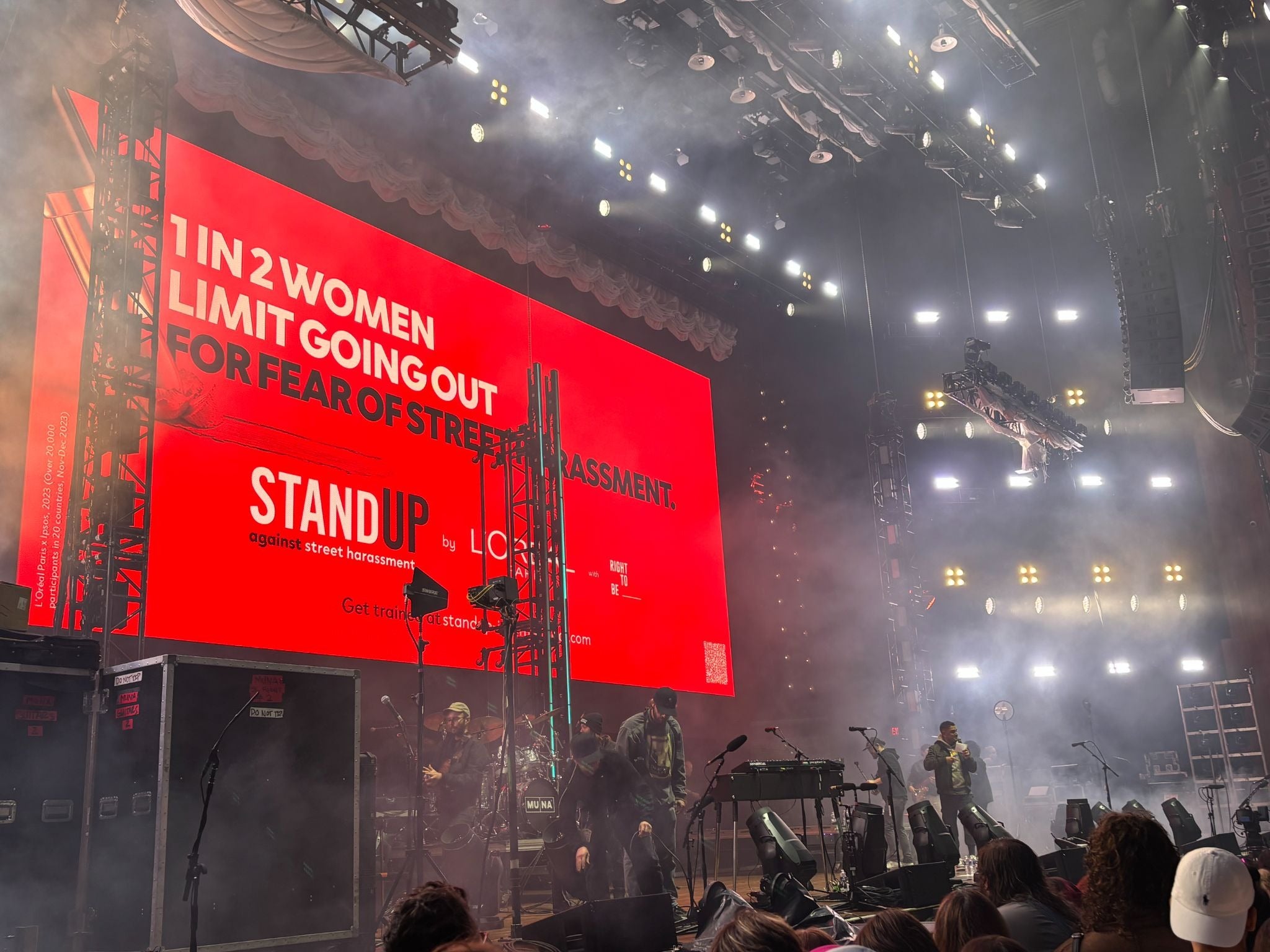
The first set we saw was Balu Brigada’s. The New Zealand band, Balu Brigada, left the stage after playing their most popular song “Backseat”, and the screen changed to a red image displaying the phrase “STANPUP”, then Alberto, a representative of STANDUP, a program L’Oreal Paris runs in collaboration with NGO Right to Be, came on stage to introduce the Five Ds (Distract, Delegate, Document, Direct, Delay to the crowd.
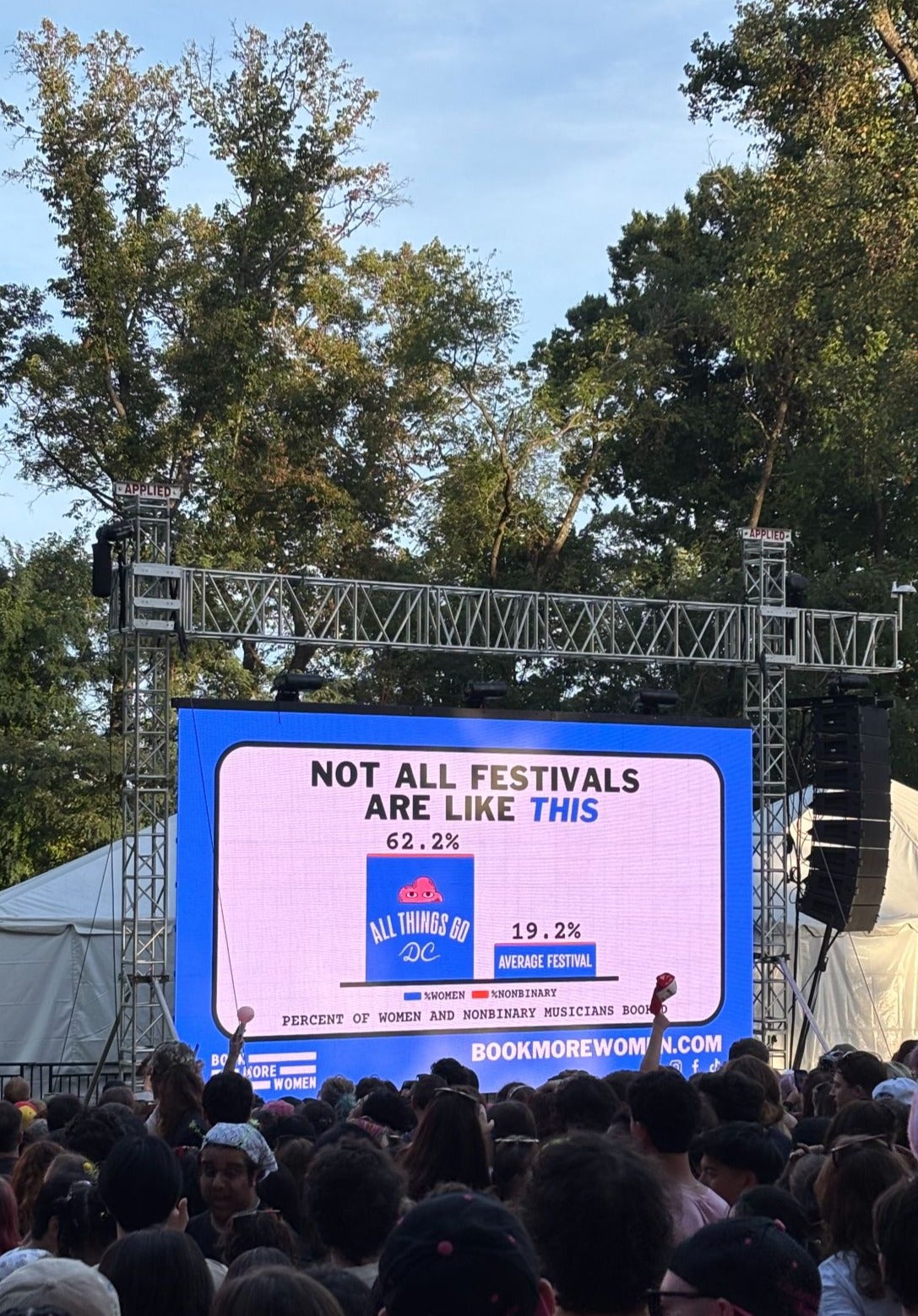
Slayyyter was playing next, so it was time to head to the Chrysalis stage. By the stage, there was a screen where you could see what was happening on the main stage. Before Slayyyter, the screen showed Robby Hoffman’s standup routine, but it soon switched to show a graphic that read “NOT ALL FESTIVALS ARE LIKE THIS,” communicating that while the average festivals lineup is 19.2% women or nonbinary, ATG’s is 62.2%. This graphic was sponsored by, or at least done in partnership with, 501(c)(3) Book More Women.
Music festivals are characterized by a great number of people with similar interests in the same place, making them opportune moments for organizations to try to mobilize the audience for a cause; festival attendance gives you an opportunity to interact with social issues you care about, from QR codes listed on graphics such as STANDUP’s to calls to action organizations like Book More Women, festivals like this represent an excellent means of getting engaged in the conversation about what matters to you.
Soon after reaching the Chrysalid stage, Slayyyter, who is currently on her “WOR$T GIRL IN THE WORLD TOUR” tour, began her set, playing hits like “Crank”, “Crank 2” and “Brand New Chanels”. Unfortunately, we never heard her play “BEAT UP CHANEL$” because we had to make it to Ethel Cain’s set on time.
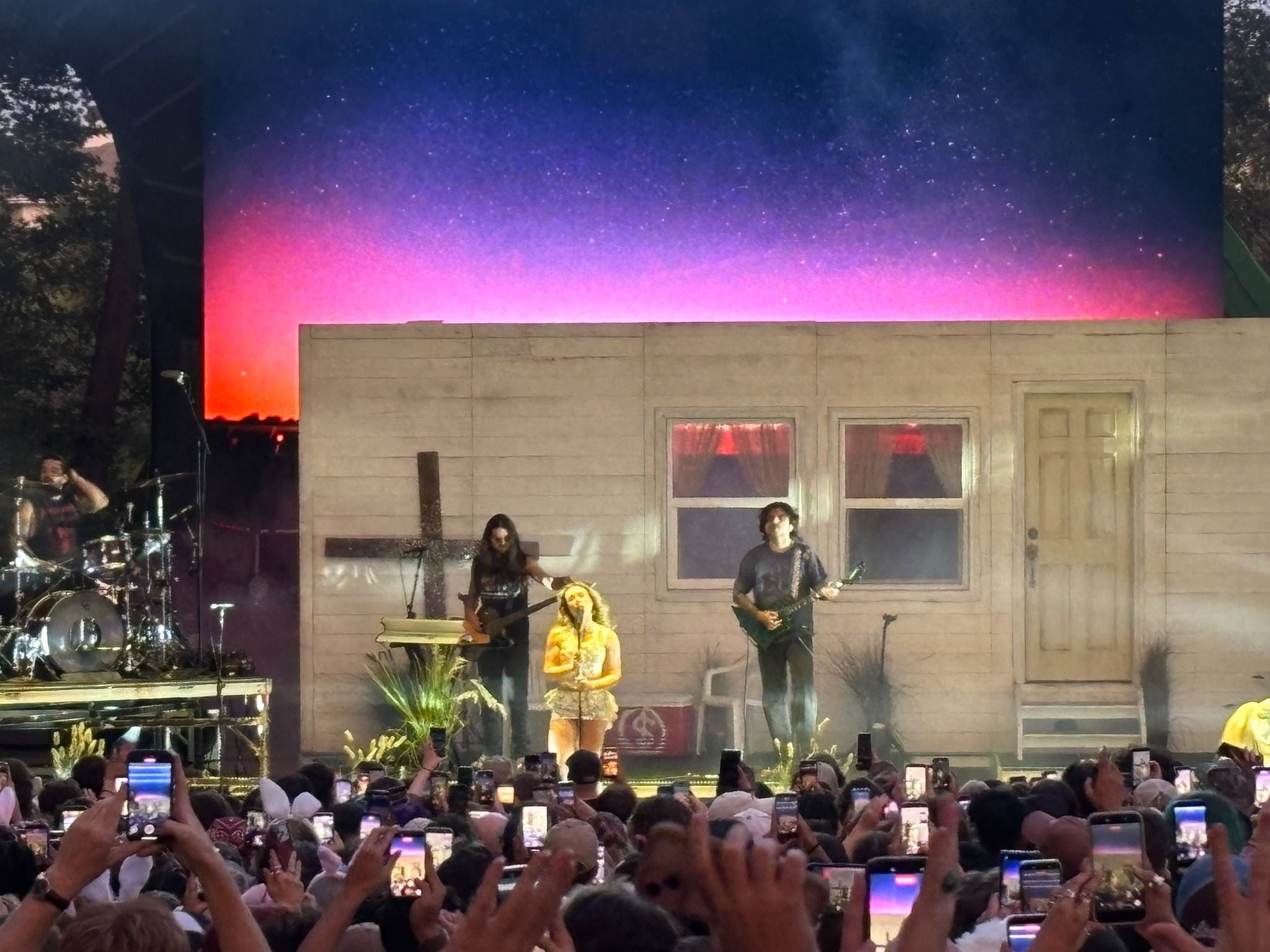
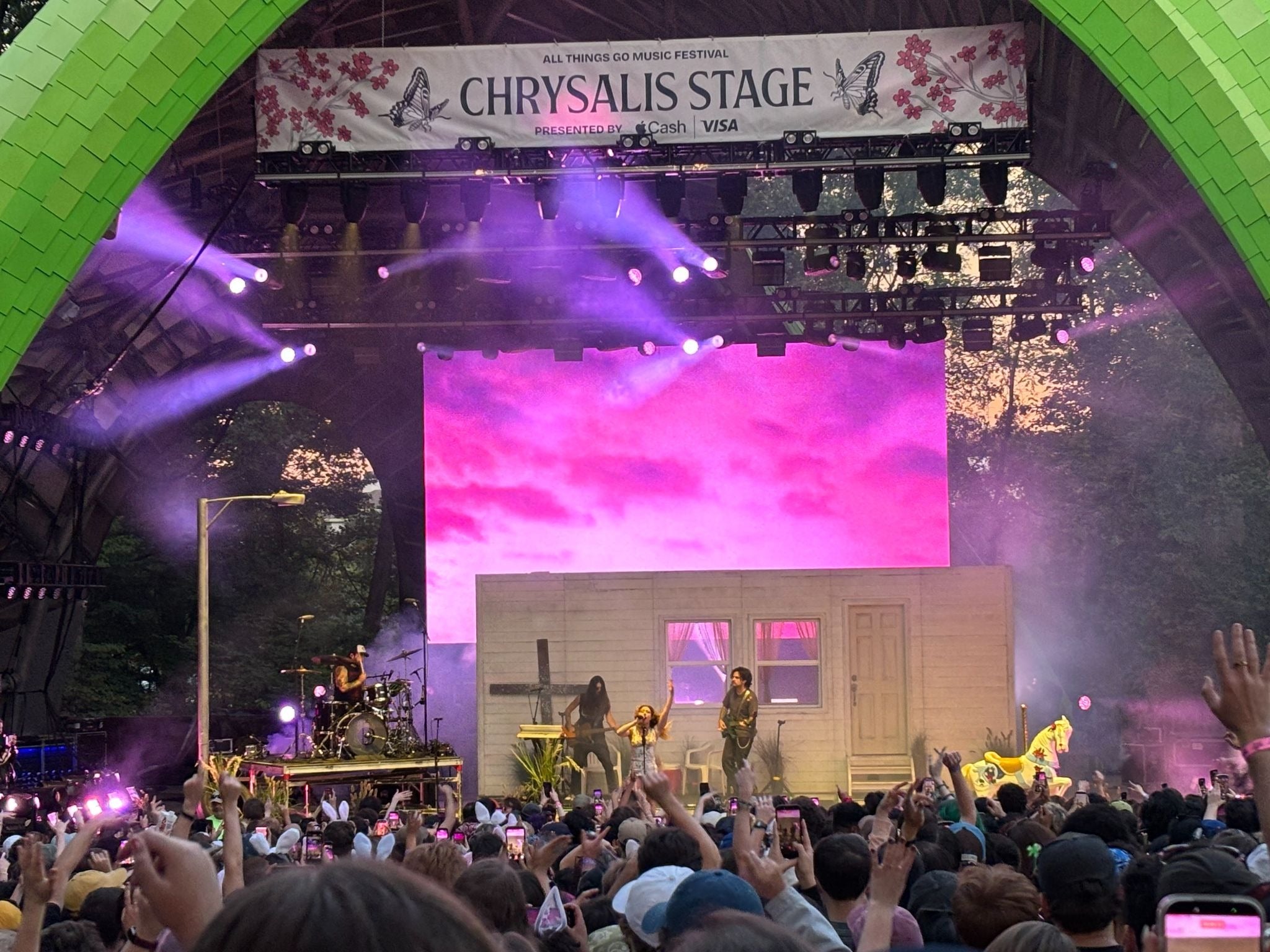
One of Ethel Cain’s most well known songs “American Teenager”, from her album Preacher’s Daughter, follows a fictional preacher’s daughter as she becomes more disillusioned with the town and culture she grows up in, speaks to a broader feeling of frustration in the promise of the American Dream felt by many Americans. Ethel Cain’s set opened with “American Teenager.”
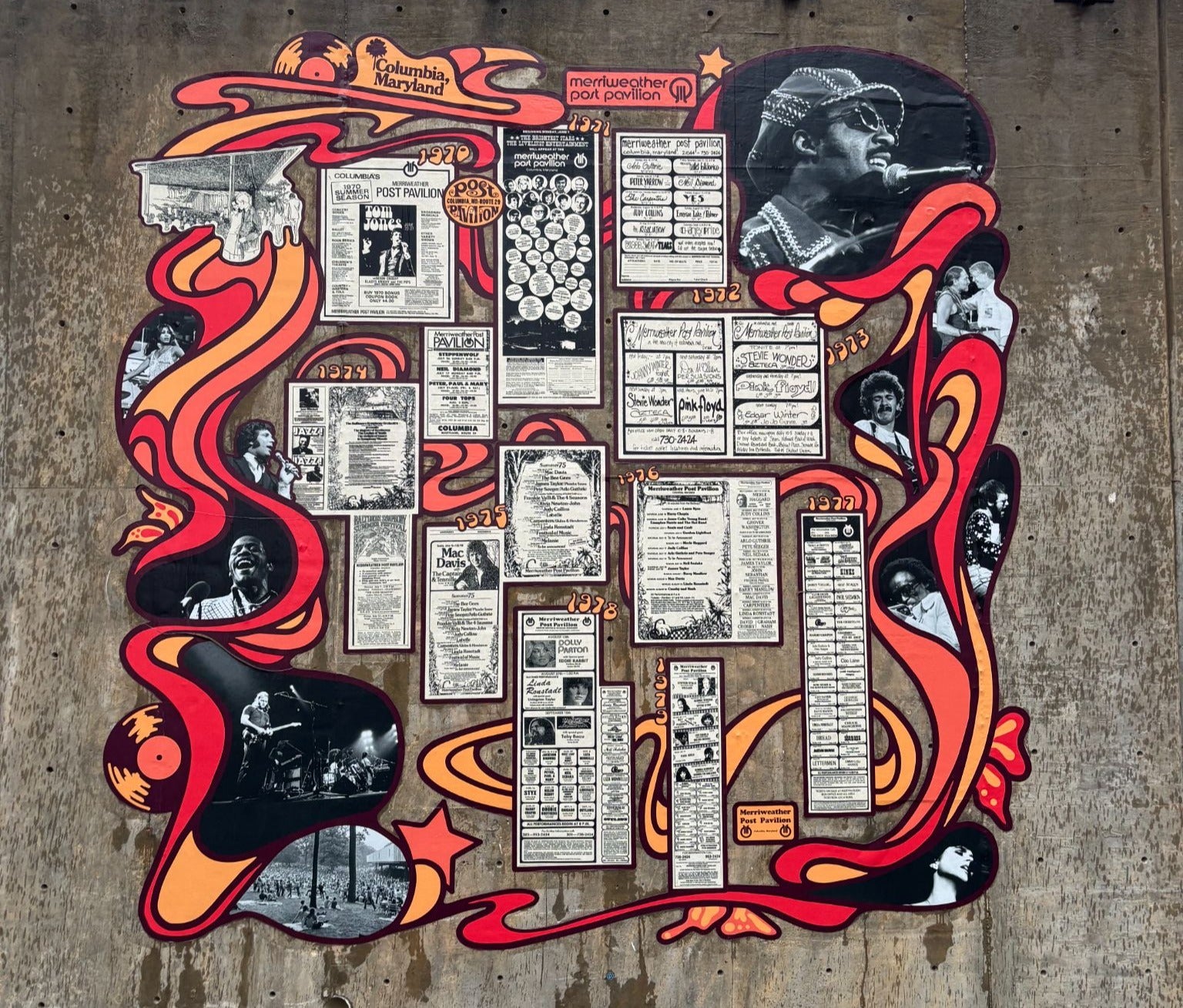
My sister Elsa joined me on Saturday the 26th. We arrived halfway through Suki Waterhouse’s set and did some sightseeing before MUNA came on stage, stumbling across wall murals depicting Merriweather’s history. In the 70s mural, President Jimmy Carter can be seen on stage with Willie Nelson in 1978. Carter and Nelson shared a long friendship that dates back to Carter’s time in the White House, where Nelson was a routine guest. The pair had a common working-class background, rooting their  respective presidential campaigns and discographies in a shared anti-establishment message. Watergate had stained the American people’s perception of government before Carter’s successful 1976 presidential campaign. As a result, his campaign found support from both the Deep South and Northeast because of a national dissatisfaction with and distrust of the government at the time, which made a Washington outsider like Jimmy Carter so attractive. Around the time of Watergate and Carter’s victory, Willie Nelson came to stardom, echoing sentiments similar to those of Carter’s campaign. Carter’s friendship with figures like Nelson and Bob Dyland helped cement his image as a champion of the working class, while helping him appeal to the younger demographic of the time who had grown up around the discourse surrounding America’s involvement in the Vietnam War. Now while Carter’s political career did not last as long as Nelson’s musical career, the duo’s relationship and similar ideological platforms represent how music and politics are connected and how both our politics and playlists are influenced by similar factors.
 Passing President Carter, we made our way back to the pavilion to see MUNA, known for “Dancing on the Wall” and “Eastside Girls”. About halfway through the performance, Naomi McPherson of MUNA expressed frustration with major tech companies such as Palantir before playing their song “Big Stick” from their new album Dancing on the Wall. “Big Stick”, a reference to Teddy Roosevelt’s foreign policy doctrine and America’s legacy imperialism, criticizes the military and prison industrial complexes and how Americans buy into what feeds the surveillance state that is in a symbiotic relationship with these complexes.
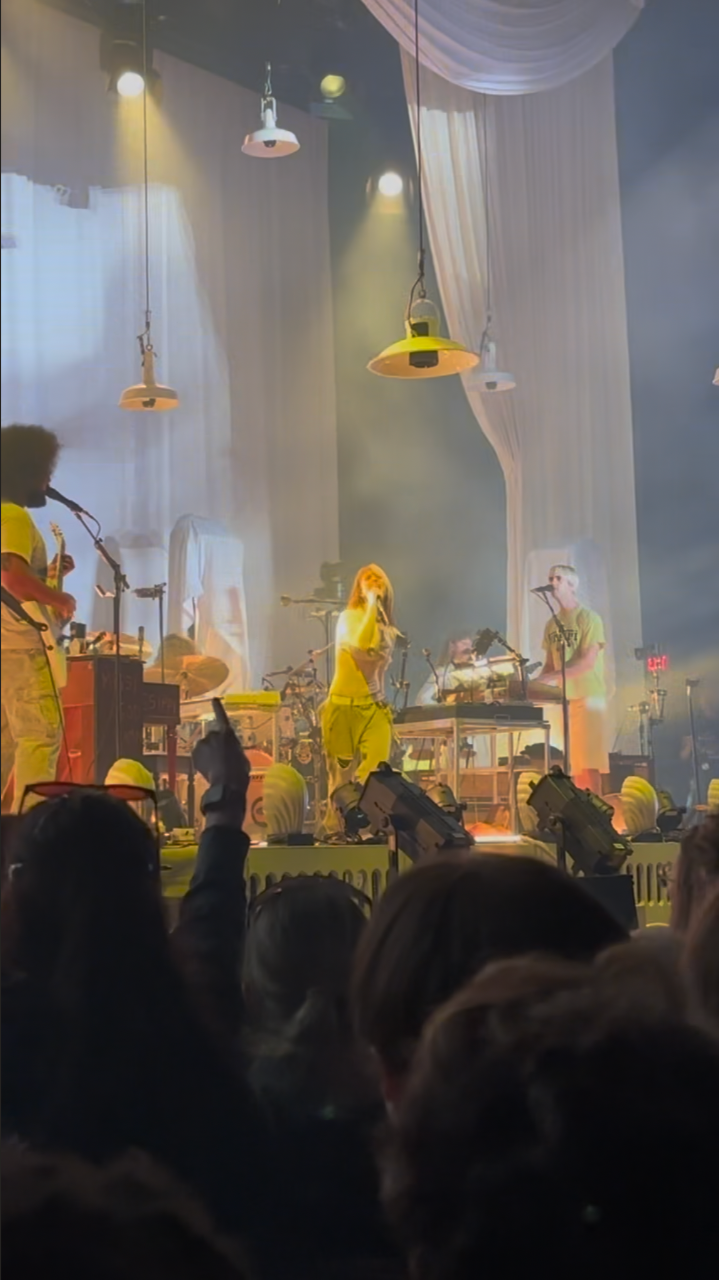
Zara Larsson came on after MUNA, but she was playing at the Chrysalis stage, but we wanted to be close to the stage for Hayley Williams, so we stayed in the pit. Williams released her album Ego Death at a Bachelorette Party in 2025. In Ego Death, Williams, who spent her early career in Tennessee playing in the local Nashville scene, later forming the band Paramore in Franklin, Tennessee, a Nashville suburb, in 2004, expresses feelings of disappointment the current political climate and disillusionment with organized religion and its influence in the political process, particularly in how certain policies do not line up with the religious doctrines often cited by politicians and community leaders.
Williams opens her show around 9:30 p.m., performing songs from Ego Death at a Bachelorette Party. About halfway through her set, she sits down at a piano, lighting the incense sitting atop it, and begins playing the album’s namesake, the song “Ego Death at a Bachelorette Party”, which is about her experience in small clubs and country singer bars. As she plays the opening notes, she says to the crowd “The homeland is in tatters”, referring to Nashville, Tennessee. Following this song, she plays “True Believer”, which further expresses her disappointment with her home, a disappointment that does not erase all fond memories, as she still loves the idea of her home and carries the burden of loving something that might never be, in her view, uncorrupted.
“I reanimate your bones. Cause I'm a true believer.”
Ethel Cain, MUNA, and Hayley Willaims all speak to a frustration that many Americans feel about something about the state of the county. As we move into the 2026 midterm elections, consider how your favorite songs may draw similar inspirations from the political campaigns you see online. The issues that inspired your favorite songs are all on the ballot this election. The issues that made you connect with an artist and their work are on the ballot this election. The political process is greater than just the candidates you will hear about in the next few days.
 Many Americans remain disengaged from politics because they see it as disconnected from their daily life, but that could not further from the case, as the songs you hear on the radio all relate to the issues that you will have a chance to affect come November 3rd. Your engagement, your ability to influence the issues you care about, does not end on election day; it exists independently of elections, as politics is a matter of everyday life. In the same way the circumstances of the 1970s gave rise to the political career of Jimmy Carter and musical career of Willie Nelson, our current political climate is creating our favorite artists and influencing the electorate’s values that will determine this election season's winners and losers. From the national debate over the growing presence of surveillance cameras, to the role of religion in politics, if you have any opinion on any of these issues that served as inspiration for one of your favorite songs, you have a reason to vote next week. At the end of Williams’ set, right before she played “Parachute”, she cried out to the crowd, “Please f*cking vote in November!”, which was met by raucous applause. And so we echo Ms. Williams’ sentiment:
Please vote in November!
Basketball & Bloodshed with Former Mayor Andrew Fellows
By: Anderson Harlor
 Sixteen years ago, University of Maryland student John McKenna was assaulted on Knox Road by two Prince George’s County police officers during a rowdy celebration following our Men’s Basketball team’s victory over the Duke Blue Devils. That night, twenty-eight students, McKenna included, were arrested, but they were later released after the footage of Special Operations Division officers Reginald Baker and James Harrison beating McKenna was released.
Current Maryland Senator Angela Alsobrooks, serving as the Prince George’s County State’s Attorney at the time, prosecuted the officers, announcing a grand jury indictment in September 2011. When a verdict was reached in 2012, only Officer Harrison was found guilty and sentenced to one year in prison; Officer Baker was acquitted on all charges. While the officers involved may not have faced the time the students wanted them to, the county paid out a $4 million dollar settlement to the students involved, with $2 million of the settlement going to John McKenna. Even though the county was on the side of the students, a judge threw out the conviction in 2014, clearing the criminal records of the former officers, allowing them to re-enter police work, which Baker did, rejoining the clothing supply unit of the Prince George’s County police department.

The calamity on Knox road was not an isolated incident; in fact, College Park was infamous for moments of jubilee that soon became nights of chaos. The Maryland Terrapin’s first and only NCAA national title was secured on April 1, 2002, when The Maryland Terrapins defeated the Indiana Hoosiers 64-52. Students poured out of every building on campus and onto Route One, but the police were ready to respond because just a year or so before the NCAA title game, the Terrapins bested the Blue Devils 98-87, and students celebrated by causing approximately $500,000 in property damage. This pattern created a rather adversarial relationship between the students and the City of College Park, as the local police force began to be deployed preemptively around notable gamedays in anticipation of another rowdy crowd mustering after a Terrapin victory.
Police preemptively gathering when the game starts going our way is not indicative of a healthy city-student relationship. I would describe the relationship during this period as somewhat antagonistic because as the pattern continued, police began to mass in greater and greater numbers as a form of deterrence. This Route One revelry arms-race reached a fever pitch when McKenna was assaulted by officers Baker and Harrison, with a horse-mounted officer not far behind them, forcing the students, university, city, and county to take a step back from the edge and reexamine their relationship and bring College Park back from the brink of chaos.
If you walk down Knox Road on the way to Greene Turtle or Starbucks today, you will see a police cruiser or two, but never a battalion of heavily armed officers. Walking down Knox Road now, you can see that something has changed in how the students, university, city, and county interact with each other. Maybe our move to the BIG10 has something to do with it; maybe there have not been any games worth rioting about since 2014, but maybe there’s something more to it; maybe the meetings between students, the university, and the city actually created substantial and lasting changes.
What can this remarkably interesting episode in College Park’s history can teach us about the relationship between students and the city of College Park and what lessons we can take from this story as we continue to develop our relationship with our wider College Park community. I was not around for any of this, but lucky for me, the University of Maryland’s Professor Fellows*, College Park City Council member from 2001-2007 and Mayor of College Park from 2009-2015, was kind enough to answer a few of our questions as we explore College Park’s history of basketball and bloodshed:
I can't really imagine what it was like when it happened, and by it, I mean what was it like when Maryland won a national championship? How was that?
Ah, well, so in 2002, like when it happened, it's not exactly like New York City when the Knicks won, you know. But you see it in national championships in every sport: when people win the whole thing, people go nuts. And there's fire. There's damage to automobiles. There's people clamming up on things, and basically, it's sort of strange to call it celebrating because even though it is exhilaration and sort of celebration, it's also a weird tendency for some people to do destructive behavior.
A year before that game, there was a riot on campus after we beat the Duke Blue Devils that resulted in $500,000 in property damage. Was the city expecting a sort of rowdy crowd before the national championship game?
I think there was an expectation. It was my first year on the city council, so I wasn't thinking that much about it. I was watching, and I had gone to every home game that season with my dad, and so it was for me a great celebration. I think for the city after the national championship, there was an expectation that something was going to happen, and it was just a question of like how much. I think the event that happened before took us probably more by surprise. Where was I? When it happened? I remember one time I was driving to Annapolis because I had a full time job and one of my colleagues for the organization I worked with called me up from Philadelphia and said, "Morning, Mr. Mayor.” And I said, "Why are you calling me that?” And he said, "Well, it's national news that there were disturbances in College Park last night after the game.” It was just a regular season game. We beat Duke; it was great that we beat Duke, but it just took me completely by surprise that time because it was just a regular season game, and obviously the Duke rivalry was a really good one. I mean, it was a healthy rivalry, but I never did understand why people would celebrate to that extent in a regular season game.
So there was a history, a pattern of this? What was the city's initial response when the crowds began to grow after the title game?
So, following the title game in 2002, the county and the city and the university prepared more and more, and there was a larger police presence at almost whenever there was an anticipated potential event or celebration. So then began the routine that there would be a large Prince George's County police presence at different parts of College Park and near the downtown, in anticipation that the bars were going to empty out and that people were going to do something. And there was one incident where students were beaten by police, obviously completely unacceptable, and I was the mayor at that time, and so we, the mayor and council spoke, and we acknowledged that that was not correct, and fortunately, the the students took action and took the police officers to court and got a conviction. The thing I'm proudest of in relation to this, and this this does relate to the broader concept of students and the university and the city working together, is that in an eventual follow up to the reaction and the prepared response of just getting lots of police to be deployed, which obviously costs a lot of money for one thing, and also there's always the potential for both arrests and colliding Prince George's County police courts, but also potentially police misbehavior and obviously student misbehavior as well, that we, the city and the university, agreed with work with the police to have basically a celebration on Route One, and we closed down Route One. I was out there with the president of the university and the chief of University of Maryland Police, and I think the county police chief was out there as well. We were just walking the streets and celebrating with the students, and I don't remember what the level of victory was, but it was a happy scene because this time there was no violence. There was a feeling of joy taking over Route One.
That's a very interesting evolution, a preemptive large police presence, which sounds rather adversarial, to closing the roads to celebrate with students. It sounds like the city's student relations improved quite a lot within that time period. What is your assessment of city student relations now? Have they improved?
Well, I would say it's probably about the same. All the things that we've done, the City of College Park, has done with the University of Maryland is a constant engagement with the University. I believe the mayor currently talks monthly with the president and there's council members usually with him, and also the city manager. I, we, instituted the process in my six years as mayor of just having regular conversations with the University and city. We talked for lots of reasons about lots of different things, including public safety, which includes all the police issues, and which includes how do you handle post victory major victory events. I also think that we did a good job of bringing the student leadership into the conversation about how to handle these things; student leadership also obviously plays a role in developing a different response. I mean, we have not had a national championship for either basketball or football, so that will be a major test.
On the matter of student leadership, do you think the relationship between students and long-term residents would improve if students had a bigger role in city politics?
Well, I think it would do a few things. If all 34,000 you know students really got involved in the issues, it would transform College Park into a much more engaged community. Some longer-term residents might be unhappy about some of the decisions that were made if they felt that the student majority was acting in a way that was detrimental to the older and longer term residents, but that's democracy. I also think that the housing issues would be a much larger and differently discussed issue than it has been. It's somewhat hard to imagine a fully engaged student body, because typically college students don't get very involved in local politics; they're most involved around presidential and national issues. The Vietnam War, especially when the draft was on, was a primary concern of every person who was attending the University of Maryland. I think now that economic issues and things like technology are major concerns. There's lots of concerns, certainly climate change. Youth have been among the leaders internationally on the drive for change, but at least I have not seen students mobilizing too much locally. They have certainly gotten involved in various ways, but it hasn't been seen that much in College Park.
Well, what would get students to get involved in College Park? Is there anything that would lead to a more substantial turnout in the next College Park election next November?
I think that is on the student leadership. Part of it's the city of College Park working to be as accommodating as possible and figuring out how to work with students to get more involved. I think the city of College Park itself felt before my time as mayor. I think it felt pretty alienated from both the university and also the county, and I think the students feel very much part of the university community, which is a really good thing. I would say in general, students feel less a part of College Park; they feel like more part of the campus community. The students who live off campus, if they live in some of the high rises in the apartments, it still feels like the university campus, even though they're off campus. And it's when they live in a neighborhood like Old Town, or places where they are interacting for good and bad with local neighbors, there's more of a sense of being in a community where you're living with people who are not college students.
On the matter of community, there's the topic of how we're represented by the city. A district for students in particular has been a topic for a while; I know you yourself suggested it a long time ago. What effect would this student district have on civic engagement from the student body?
I think it would be really significant. I think it is good to have a student liaison, but it's not the same as having an actual member of the council, and I think having a district that geographically mostly, if not completely represented students, would mean that the students could focus on who is the person they want to elect to that position of the city council, and how they get that person elected. That person would think about ways to get the students more involved on an ongoing basis. And, I've talked about this scenario before, where you have we have currently eight city council seats, and if we had eight city council seats where there was a single member for the four districts that exist, but added add a district, so have a fifth district, and that would be the one that would be geographically described as mostly, if not completely, covering students, and then have three at-large seats that the entire city, including campus, can vote on, would mean that every resident of the city, whether they're a student or not, would be voting for four different members of the of the of the city. I think that would mobilize people all across the city to be a little bit more engaged since there would be more power in their votes.
Do you think we'll ever see a student city council member?
Yes.
When?
That's hard to predict. I believe the only way it's going to happen is if the students mobilize to make it happen. I don't think it's going to be given to the students. The government of College Park and the elected leaders want to encourage people to get involved, but they've been pretty satisfied with the way things are now.
What is one reason students should take a more active role in their local democracy? Why should we mobilize?
You can get more done if you're involved locally. If you're interested in politics at all, it's a way to get involved in whatever issue you care about the most and get people mobilized around whatever you think is important. You can work to get the city council to enact a resolution supporting national legislation, or some kind of a thing that is towards a bigger picture. But also with things like housing and things like transportation, they're not easy solutions, but there are things that can be done every year, every month to make things better. Students have a wide variety of views, and so it's not as if there's a monolithic view of the world of students. I believe it's just the principle of democracy itself: the more people get involved, the more their voices are heard. I think it will make people happier. There may be some more division as well from time to time, but I also think that in general, democracy empowers people to feel like they're represented by the government that governs them, so you might as well start local. It's important nationally. It's important in the state, and it's very important locally.
*Professor Fellows directs the Data Justice program in College Park Scholars, working to strengthen the collaboration of the University of Maryland College Park with its surrounding communities on issues of sustainability and resilience.
Rate Your Landlord
By: Anderson Harlor
In 2025, the College Park City Council enacted the Early Lease Ordinance, which prohibits landlords from offering a lease renewal 180 days before the expiration of a tenant’s current lease, to, in the words of the city council itself, “protect tenants from landlord aggressive lease-renewal practices by limiting how early a landlord can request a renewal of a lease (College Park City Council).” The effort to enact this ordinance, spearheaded by student liaisons to the City Council Nick DiSpirit and Amira Abujuma, saw an incredible amount of student involvement, with students from every part of campus sending in testimonies or testifying in person. We asked Senior Kharei Munoz why she felt it was important to send in a testimony. Here’s her response:
“I thought it was important because I think that as college students, there is a huge amount of stress with classes and finding housing, and at times the way these 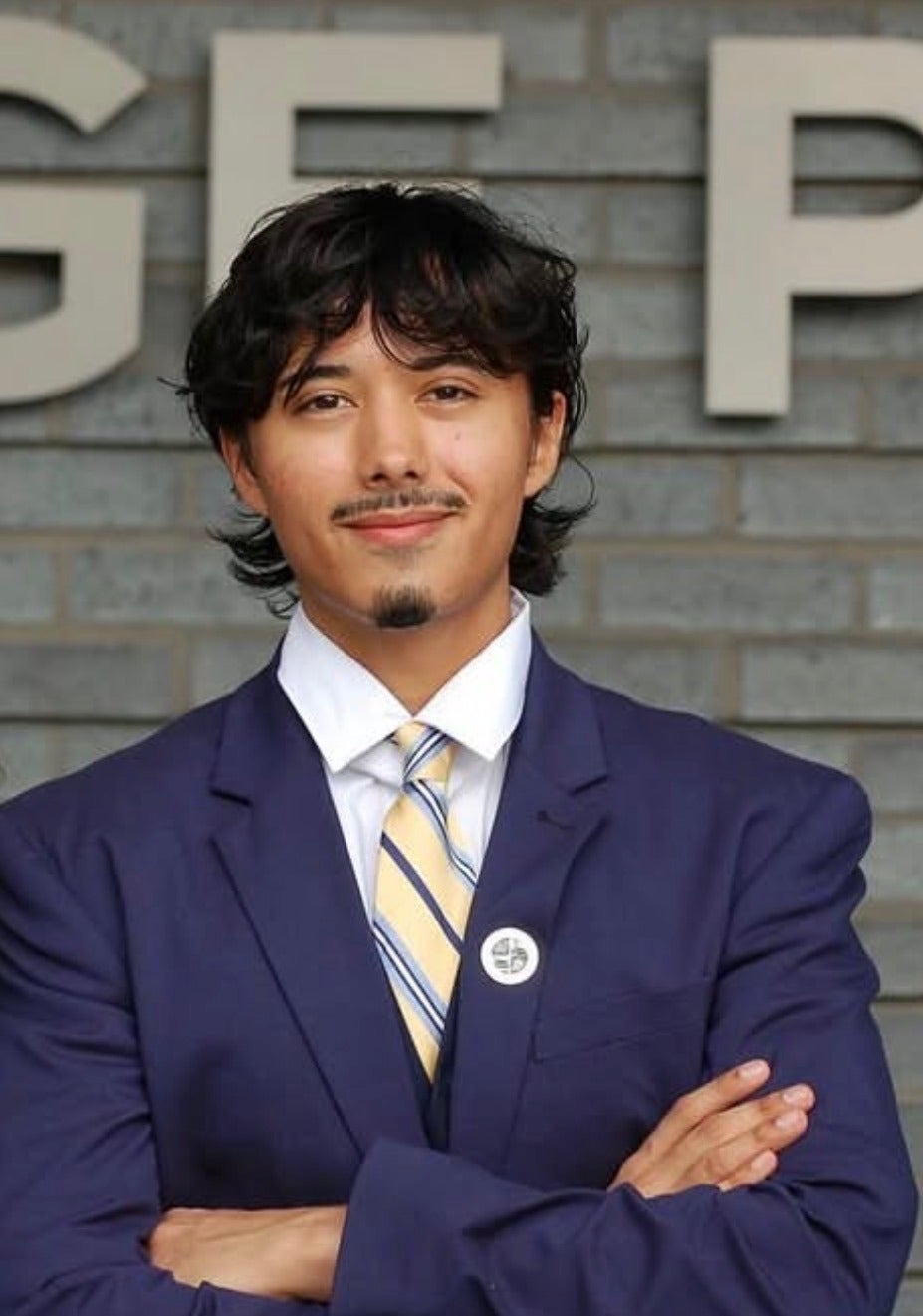 apartments reach out to students to try and get them to resign can feel very intense. I don’t want students losing out on housing, feeling pressured, or having additional stress around where they are going to live.”
The Early Lease Ordinance was a massive victory for students, a victory that demonstrates the capacity you have to influence the legislation that directly affects your life. Unfortunately, this ordinance did not solve everything: students still report predatory leasing practices. Do you have something to say about your landlord? Do you want to know which apartments to avoid? We spoke with former student liaison to the City Council Nick Spirito to find out how you can take back your power in the housing market and rate your landlord:
Can you tell us a little bit about the Rate Your Landlord project and the Instagram account and the website?
It's like PlanetTerp or Rate you Professor, but for your landlord. It's live right now, and anyone can leave a review of their landlord. It's completely anonymous, so you don't have your information tied to you at all. We're hoping that we can make this a site that both residents and the city can utilize for understanding which places to look into that are breaking code violations. Residents can use it to see which places to avoid when they're on their housing hunt for the following year.
And why would you say there's a need for something like this?
Landlords in the city from both big apartment buildings to the smaller town landlords have a history of poor conditions for tenants: not giving people their security deposits back, mold infestations, and then also maintenance issues in these big buildings. And then with the early lease ordinance, right now we're already seeing a bunch of buildings, including The Standard primarily, that are breaking the law, and they're going to be investigated. They're under investigation currently for breaking the law that I helped pass last year. We live in a city where landlords and big corporation landlords honestly have more say over rental conditions than tenants and the government in this do. Having something like this gives more power back to the people by creating more transparency in the market.
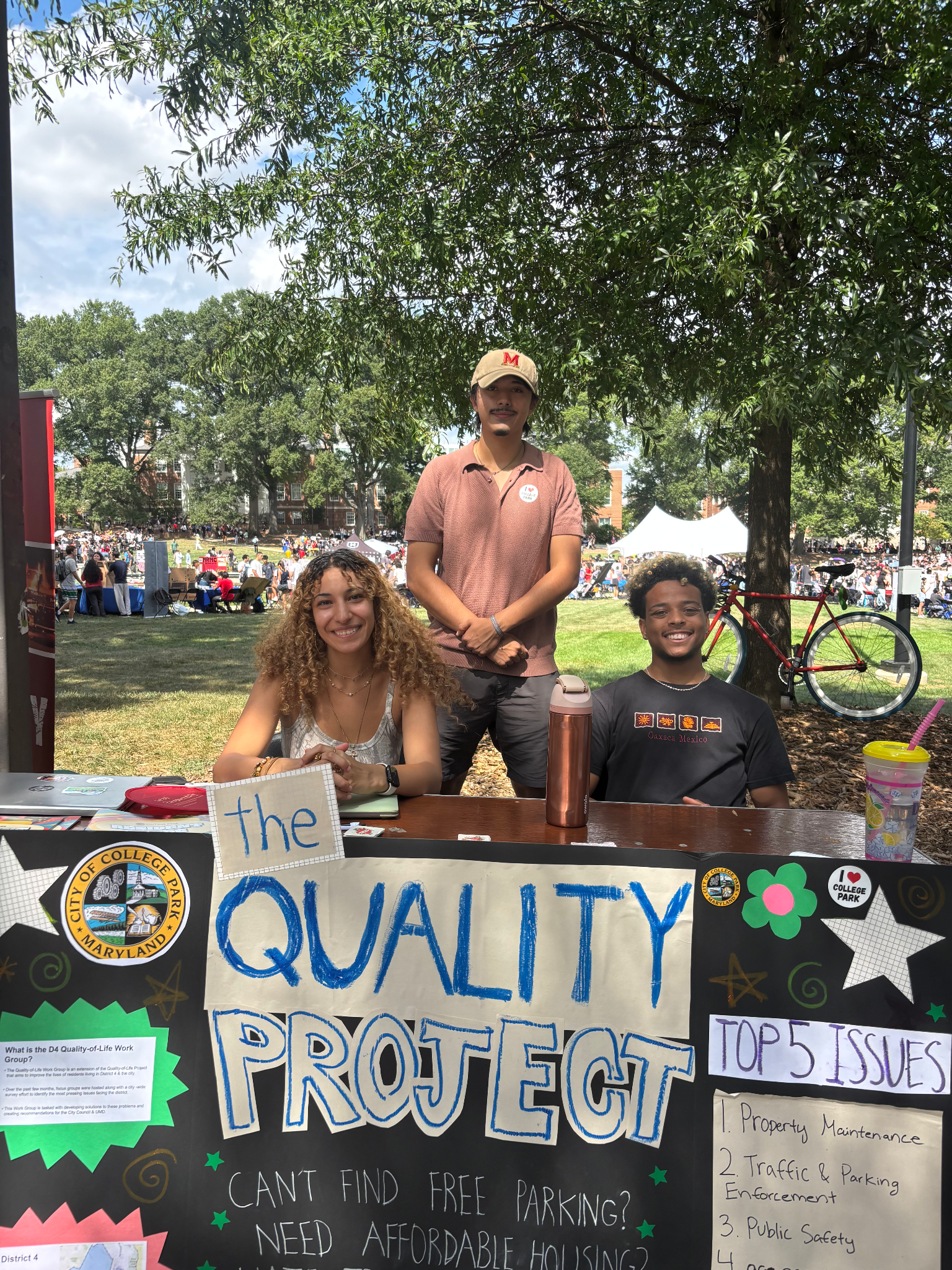 What will be done with these responses?.
The long term vision is that the government will utilize it to look into certain violations. If, let's say it’s The Standard and they got fifty reviews, that could be utilized by the local government in investigation, but the primary thing is for tenants themselves to have more power in the market space and to understand and have full information about where they're living and decide the right choice for them.
If a student has an immediate grievance, what can they do besides using this website?
Say someone's breaking the lease ordinance right now, one thing that can be done is going to the official early lease website. The website is a sub page within the College Park website, and people can directly email the city through there if there's a violation and they feel that the law is being broken or that they're being pressured to sign a lease renewal early, that sort of thing. But in addition to that, any kind of violation can be always reported to code enforcement of the city.
Do you want to rate your landlord? If so head to rateyourlandlordmd.com